


In today’s competitive sales environment, organizations are constantly searching for metrics that provide deeper insights into future business performance. While revenue, conversion rates, and customer acquisition costs remain important, these metrics often reflect what has already happened rather than what is likely to happen next.
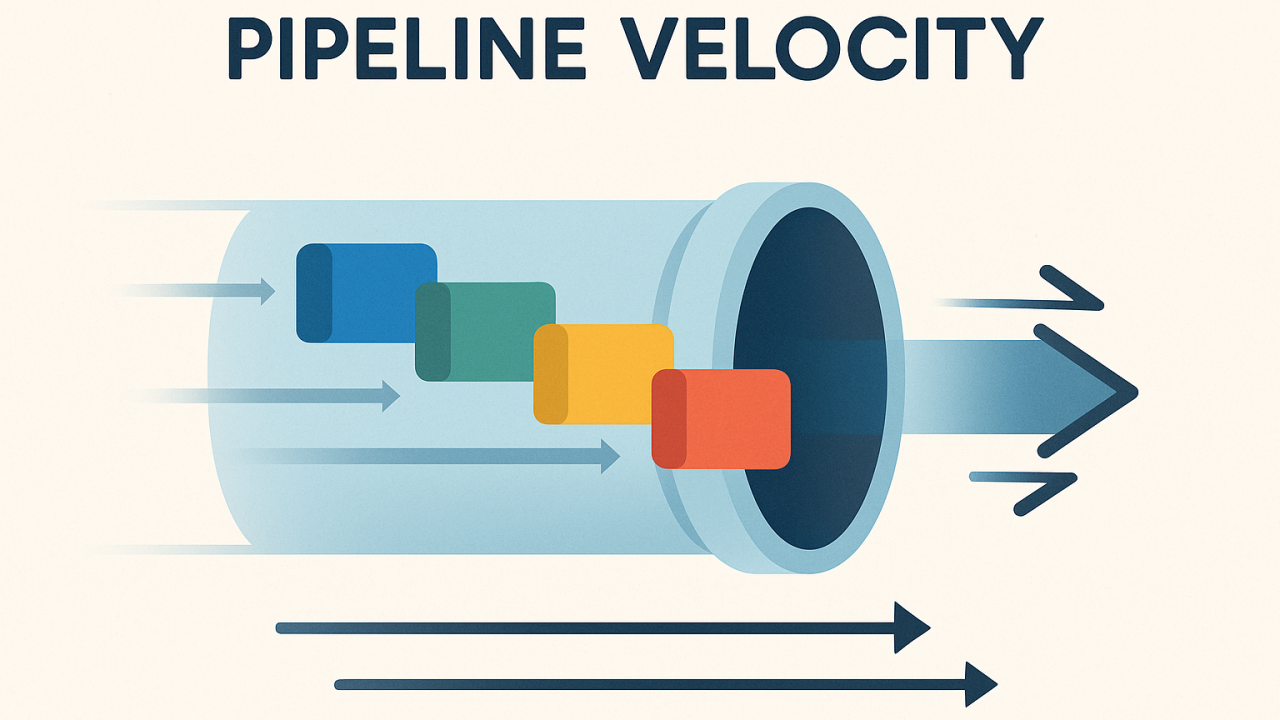
This is why many revenue-focused organizations are paying closer attention to pipeline velocity. Often considered one of the most powerful indicators of sales effectiveness, pipeline velocity measures how quickly opportunities move through the sales pipeline and convert into revenue.
Unlike traditional sales metrics that focus on individual stages or isolated outcomes, pipeline velocity provides a comprehensive view of sales efficiency. It helps organizations understand not only how much potential revenue exists but also how quickly that revenue can be realized.
For businesses looking to improve forecasting accuracy and accelerate growth, pipeline velocity has become a critical KPI.
What Is Pipeline Velocity?
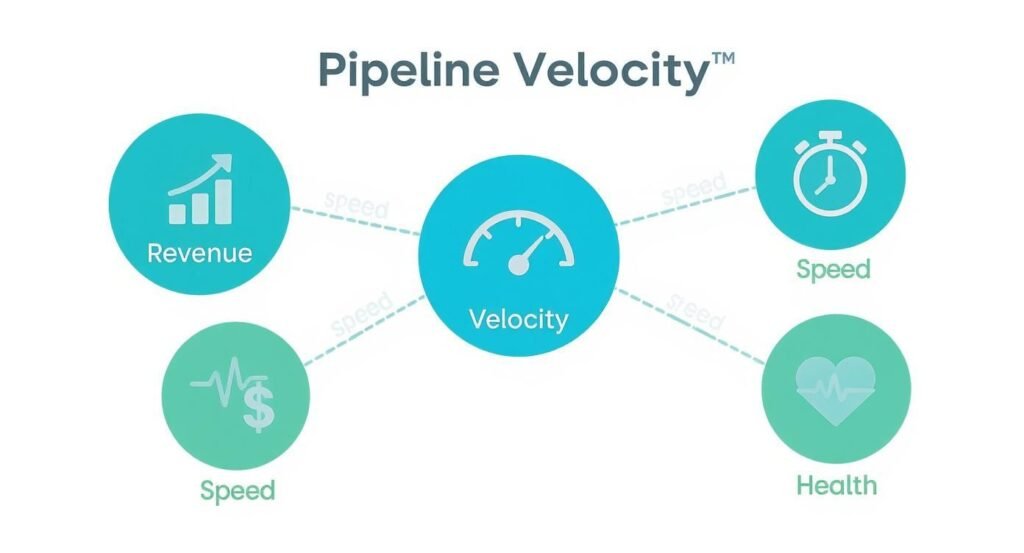
Pipeline velocity measures the speed at which sales opportunities move through the sales funnel and generate revenue. It combines multiple sales factors into a single metric that reflects overall pipeline health and performance.
Rather than evaluating leads, opportunities, or conversions independently, pipeline velocity examines how these elements work together. It answers a crucial business question:
“How much revenue is likely to flow through the pipeline within a given period?”
A healthy pipeline is not simply one that contains many opportunities. It is one where qualified prospects move efficiently from initial engagement to closed deals.
When pipeline velocity increases, revenue growth typically follows because deals are progressing faster and generating income more quickly.
Why Revenue Alone Doesn’t Tell the Full Story –
Revenue reports are valuable, but they are inherently backward-looking. They show what happened last month, last quarter, or last year. By the time revenue declines become visible, organizations may have already lost valuable time to correct underlying sales issues.
Pipeline velocity, on the other hand, acts as an early warning system. It helps sales leaders identify bottlenecks before they affect revenue outcomes.
For example, a company may have a large pipeline with hundreds of opportunities. At first glance, this appears positive. However, if deals are moving slowly through the funnel, future revenue growth may be at risk.
Similarly, a smaller pipeline that moves efficiently may generate stronger revenue performance than a larger but stagnant one.
This predictive capability makes pipeline velocity particularly valuable for strategic planning.
The Components of Pipeline Velocity –
Pipeline velocity is influenced by four primary factors:
| Component | Description | Impact on Revenue |
|---|---|---|
| Number of Opportunities | Total active sales opportunities | More opportunities create greater revenue potential |
| Average Deal Size | Expected revenue per deal | Larger deals increase pipeline value |
| Win Rate | Percentage of opportunities converted into customers | Higher win rates improve revenue realization |
| Sales Cycle Length | Time required to close a deal | Shorter cycles accelerate revenue generation |
These four variables work together to determine how efficiently revenue moves through the sales process.
Even small improvements in one area can significantly impact overall pipeline velocity.
Why High-Growth Companies Focus on Pipeline Velocity –
Organizations experiencing rapid growth often share a common characteristic: they closely monitor pipeline movement rather than focusing exclusively on revenue totals.
Revenue growth is ultimately the result of efficient sales execution. Pipeline velocity provides visibility into that execution process.
High-growth companies understand that increasing the number of opportunities alone is not enough. If opportunities remain stuck in the pipeline, growth eventually slows.
By measuring velocity, sales teams can identify areas where deals are slowing down and implement targeted improvements.
This proactive approach helps organizations maintain consistent revenue momentum.
Common Causes of Slow Pipeline Velocity –
Many businesses unknowingly create friction within their sales processes. These inefficiencies often reduce pipeline velocity and limit revenue growth potential.
One common issue is poor lead qualification. When sales teams spend time pursuing prospects that are unlikely to buy, opportunities remain in the pipeline longer and consume valuable resources.
Another challenge is lengthy approval processes. In complex B2B sales environments, delays in decision-making can significantly extend sales cycles.
Ineffective follow-up strategies, inconsistent communication, and lack of sales enablement resources can also contribute to slower pipeline movement.
When these issues accumulate, even strong demand may fail to translate into revenue growth.
The Relationship Between Pipeline Velocity and Forecasting –
Accurate forecasting is one of the biggest challenges facing sales leaders. Traditional forecasting methods often rely heavily on historical performance and subjective judgment.
Pipeline velocity introduces a more data-driven perspective.
By analyzing how quickly deals move through the funnel, organizations can make more reliable predictions about future revenue. Faster-moving pipelines generally provide greater forecasting confidence because opportunities are progressing consistently toward closure.
This visibility allows businesses to make better decisions regarding hiring, budgeting, resource allocation, and growth planning.
In many organizations, pipeline velocity serves as a leading indicator while revenue acts as a lagging indicator.
Technology’s Role in Measuring Pipeline Velocity –
Modern CRM platforms and revenue operations tools have made it easier than ever to monitor pipeline velocity in real time.
Advanced analytics platforms can track opportunity progression, identify stalled deals, and highlight stage-specific bottlenecks automatically. Artificial intelligence is increasingly being used to analyze pipeline behavior and predict which opportunities are likely to accelerate or slow down.
These technologies provide sales leaders with actionable insights rather than simple reporting.
Instead of reacting to missed targets, organizations can proactively optimize pipeline performance before revenue is affected.
Strategies to Improve Pipeline Velocity –
Improving pipeline velocity requires a balanced approach rather than focusing on a single metric. Organizations often achieve the best results by addressing multiple areas simultaneously.
Enhancing lead qualification processes helps ensure sales teams spend time on high-potential opportunities. Improving sales enablement resources can reduce friction during customer conversations and accelerate decision-making.
Organizations can also streamline approval workflows, improve follow-up consistency, and leverage automation to eliminate repetitive administrative tasks.
Additionally, stronger alignment between marketing, sales, and customer success teams often leads to smoother opportunity progression throughout the customer journey.
These improvements collectively increase the speed at which revenue moves through the pipeline.
Pipeline Velocity as a Revenue Operations Metric –
The rise of Revenue Operations (RevOps) has further increased the importance of pipeline velocity. RevOps focuses on aligning sales, marketing, and customer success around shared revenue goals.
Pipeline velocity naturally supports this objective because it reflects the effectiveness of the entire revenue engine rather than a single department.
Marketing influences opportunity creation. Sales drives conversion. Customer success contributes to retention and expansion opportunities.
When pipeline velocity improves, it often signals stronger cross-functional collaboration and healthier revenue operations overall.
This makes it one of the most valuable KPIs for modern RevOps teams.
The Future of Revenue Growth Measurement –
As organizations become more data-driven, reliance on traditional sales metrics alone is likely to decrease. Leaders increasingly want predictive indicators that help them anticipate future outcomes rather than simply analyze past performance.
Pipeline velocity fits this need perfectly.
Future revenue management strategies will likely place greater emphasis on real-time pipeline analytics, AI-powered forecasting, and automated performance optimization. Pipeline velocity will continue serving as a foundational metric within these systems.
Organizations that monitor and optimize velocity consistently will be better positioned to achieve predictable and scalable growth.
Conclusion –
Revenue growth rarely happens by accident. It is the result of a healthy sales pipeline that consistently converts opportunities into customers at an efficient pace. While many organizations focus heavily on revenue figures, pipeline velocity offers deeper insight into the processes that actually drive growth.
By measuring how quickly opportunities move through the sales funnel, businesses gain visibility into future performance, identify bottlenecks earlier, and improve forecasting accuracy.
As sales processes become increasingly data-driven and Revenue Operations continues to evolve, pipeline velocity is emerging as one of the most important KPIs for modern organizations.
For companies seeking sustainable growth, understanding pipeline velocity is no longer optional—it is essential for predicting and accelerating future revenue success.