


Artificial Intelligence: Driving Smarter Marketing –
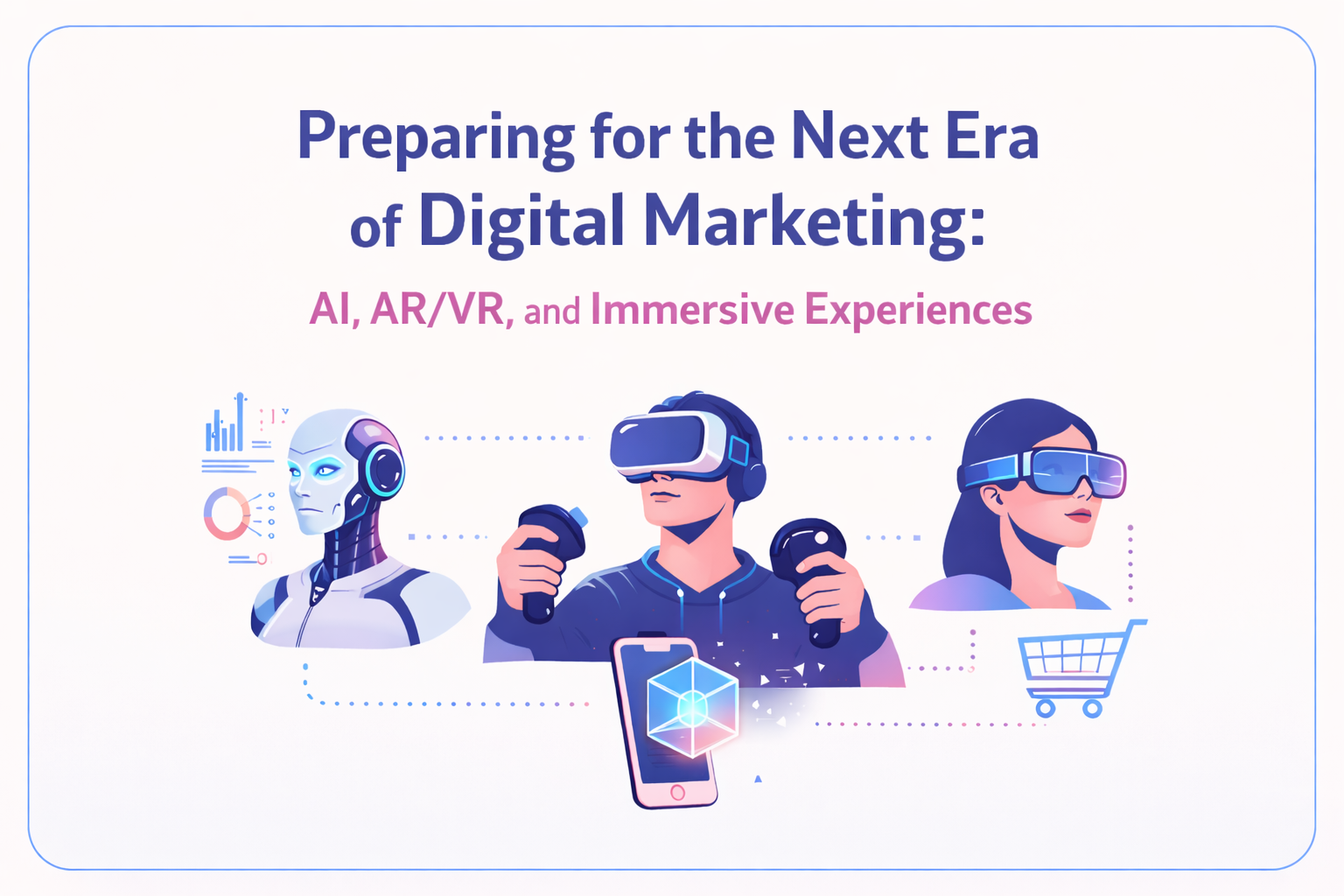
The rise of Artificial Intelligence (AI) is transforming digital marketing from simple automation to strategic decision-making. AI is now at the center of personalized marketing campaigns, predictive analytics, and audience engagement. Brands that leverage AI can gain a deeper understanding of customer behavior and respond in real time, creating meaningful interactions. Some of the most impactful applications include:
- Delivering personalized content and product recommendations tailored to individual preferences.
- Using predictive analytics to anticipate trends, customer needs, and purchase behavior.
- Automating ad targeting, creative testing, and bidding strategies for improved ROI.
- Deploying AI-powered chatbots for instant customer support and engagement.
- Optimizing email campaigns with dynamic segmentation and predictive subject lines.
Augmented Reality: Engaging Customers in Real-Time –
Augmented Reality (AR) is redefining how customers interact with brands by overlaying digital content onto the physical world. This technology is no longer limited to gaming or novelty; it has become a practical marketing tool for engagement and conversion. Brands are increasingly using AR to create immersive experiences that capture attention and foster loyalty. Key implementations include:
- Virtual try-ons for products like fashion, accessories, eyewear, and cosmetics.
- Interactive product packaging that reveals additional information or experiences when scanned.
- AR advertisements that allow users to explore products within their own environment.
Virtual Reality: Immersive Storytelling and Brand Loyalty –
Virtual Reality (VR) takes immersion to the next level, enabling brands to craft fully interactive environments that captivate audiences. VR provides an unparalleled opportunity to tell a story, showcase products, and deliver experiences that feel real. Many industries, from real estate to automotive and retail, are already leveraging VR for innovative marketing campaigns. Key use cases include:
- Virtual showrooms that allow customers to explore products remotely.
- Hosting virtual product launches, conferences, and global events.
- Creating immersive brand storytelling experiences that leave lasting impressions.
- Conducting VR-based product demonstrations or training sessions.
Integrating AI, AR, and VR for Holistic Experiences –
The real power of modern marketing lies in combining AI, AR, and VR to create fully immersive, intelligent, and personalized experiences. Businesses that integrate these technologies into their strategy can engage consumers on multiple levels, delivering value while driving conversion. Effective strategies include:
- Investing in AI tools for predictive analytics, personalization, and conversational engagement.
- Developing AR/VR pilot projects to evaluate engagement, usability, and ROI.
- Upskilling marketing teams to understand immersive tech, AI algorithms, and data analytics.
Challenges and Considerations for the Future –
While the potential of AI, AR, and VR in digital marketing is enormous, there are important challenges that businesses must address before scaling these technologies. Careful planning and execution are required to maximize benefits and minimize risks. Some key considerations include:
- High implementation costs for AR/VR content creation and AI software platforms.
- Technical complexity in designing experiences that work seamlessly across devices and channels.
- Privacy and data security concerns, especially with AI-powered personalization.
- Ensuring accessibility and adoption among diverse customer segments.
- Aligning immersive campaigns with overall marketing strategy and business objectives.
- Measuring the effectiveness of new technologies with reliable KPIs and analytics tools.
Conclusion –
The next era of digital marketing is defined by AI-driven intelligence, AR-powered interactivity, and VR-enabled immersion. Companies that adopt these technologies strategically will be able to deliver highly personalized, engaging, and memorable experiences to their customers. Success requires investing in technology, training teams, integrating across channels, and measuring outcomes effectively. Brands that prepare today will lead the market tomorrow, shaping the future of marketing with experiences that are intelligent, immersive, and impactful.