


In the competitive world of digital advertising, reducing Cost Per Click (CPC) is a common objective for marketers aiming to maximize their return on investment. However, lowering CPC at the expense of conversion rates can ultimately harm campaign performance. The real challenge lies in striking the right balance—achieving lower costs while maintaining or even improving conversions. This requires a strategic approach that focuses on relevance, audience intent, and continuous optimization rather than simply cutting bids.
Improving Ad Relevance and Quality Score –
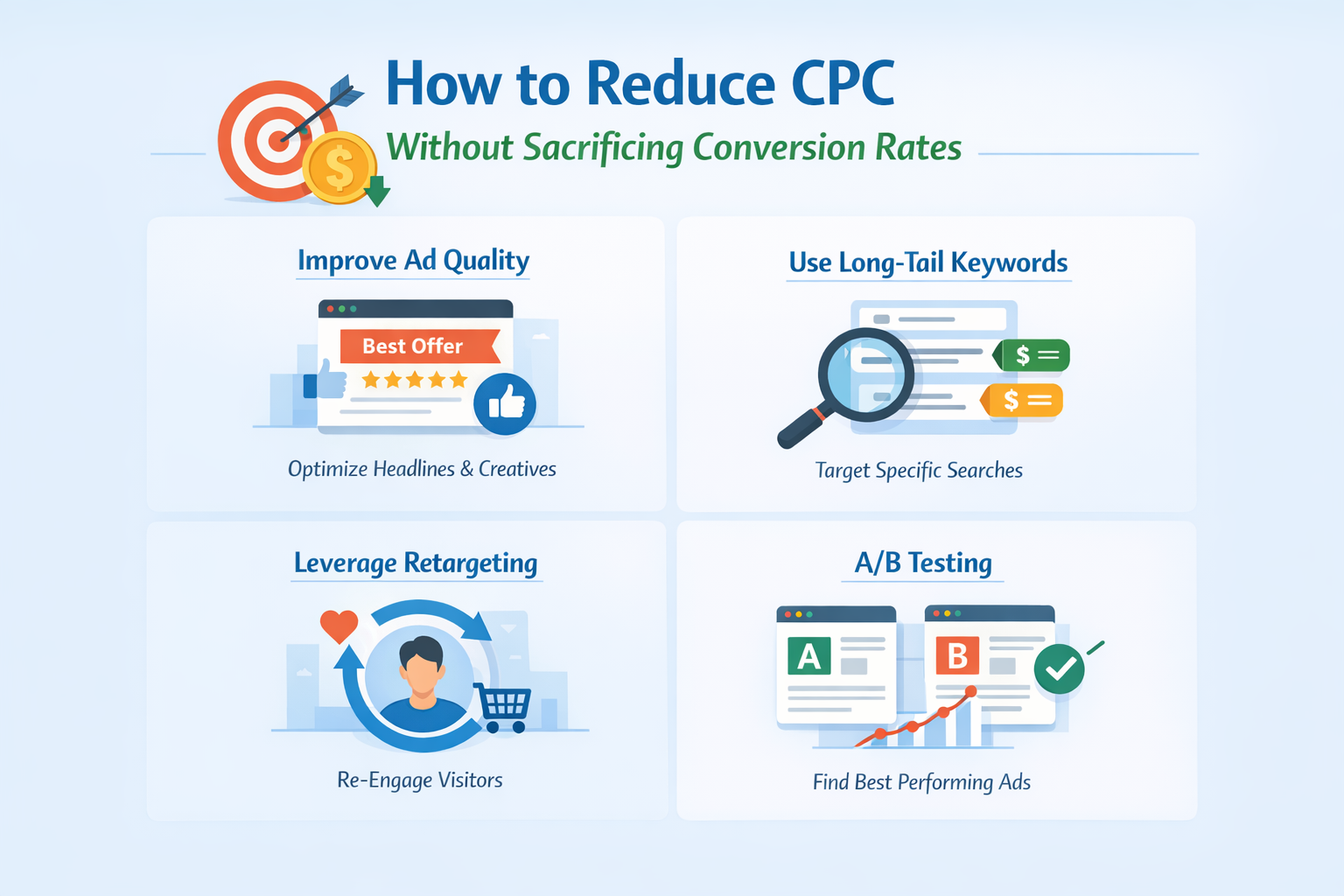
One of the most effective ways to reduce CPC is by improving ad relevance and Quality Score, especially on platforms like Google Ads. When your ads closely match user intent and keywords, search engines reward you with better placements at lower costs. This involves crafting compelling ad copy, using targeted keywords, and ensuring that your landing pages align perfectly with what users expect after clicking. A well-optimized campaign not only reduces CPC but also improves user experience, leading to higher conversion rates.
Targeting High-Intent Keywords –
Focusing on high-intent keywords is crucial for maintaining conversion rates while optimizing costs. Instead of targeting broad and generic search terms, advertisers should prioritize long-tail keywords that reflect a user’s readiness to take action. These keywords may have slightly lower search volumes, but they often bring more qualified traffic. As a result, even if the CPC is not drastically reduced, the cost per conversion improves significantly, making campaigns more efficient overall.
Eliminating Wasted Spend –
Reducing unnecessary spending is another key factor in lowering CPC without affecting conversions. By regularly analyzing search term reports, marketers can identify irrelevant queries and add them as negative keywords. This prevents ads from appearing in unrelated searches, ensuring that budgets are spent only on high-quality traffic. Over time, this refinement leads to better campaign performance and a more efficient allocation of resources.
Enhancing Ad Copy and Click-Through Rate –
A strong click-through rate (CTR) signals to advertising platforms that your ad is relevant and valuable to users. Higher CTR often results in lower CPC due to improved ad rankings. Writing engaging ad copy with clear value propositions, compelling headlines, and strong calls-to-action can significantly boost CTR. Continuous A/B testing of different ad variations helps identify what resonates best with your audience, enabling ongoing improvements in both CPC and conversion performance.
Refining Audience Targeting –
Effective audience targeting plays a major role in balancing cost and performance. Platforms like Meta Platforms and Google Ads offer advanced targeting options that allow advertisers to reach users based on behavior, interests, and intent. By focusing on high-converting audiences—such as remarketing lists or in-market users—and excluding low-performing segments, you can reduce wasted clicks and improve overall campaign efficiency.
Optimizing Landing Page Experience –
Even with lower CPC, poor landing page experience can lead to lost conversions. A well-designed landing page should load quickly, be mobile-friendly, and deliver a clear message that matches the ad. When users find exactly what they expect, they are more likely to convert. Improving landing page performance not only boosts conversion rates but also contributes to better Quality Scores, indirectly helping reduce CPC.
Using Smart Bidding Strategies –
Modern advertising platforms provide automated bidding strategies that optimize for conversions rather than just clicks. Features like Target CPA or Maximize Conversions in Google Ads use machine learning to adjust bids in real time based on the likelihood of conversion. This allows advertisers to maintain strong performance while keeping CPC under control, without the need for constant manual adjustments.
Conclusion –
Reducing CPC without sacrificing conversion rates is not about minimizing costs blindly but about maximizing efficiency across the entire advertising funnel. By improving ad relevance, targeting the right audience, eliminating wasted spend, and optimizing both ads and landing pages, businesses can achieve sustainable growth. The key is to focus on quality over quantity—ensuring that every click has a higher chance of converting. With a data-driven and strategic approach, it is entirely possible to lower CPC while simultaneously enhancing overall campaign performance.