



Introduction –
HR technology has moved far beyond payroll systems and employee databases. Today, organizations are investing in AI-powered recruiting, workforce analytics, employee experience platforms, learning systems, skills intelligence, automation, and modern HCM platforms. As these technologies become more connected to enterprise data and business strategy, the decision to invest in HR technology can no longer sit entirely within the HR department.
This is creating a closer relationship between the Chief Information Officer (CIO) and the Chief Human Resources Officer (CHRO). The CHRO brings expertise in people, workforce strategy, employee experience, and organizational change, while the CIO brings expertise in technology architecture, cybersecurity, data governance, integration, and technology investment. Together, they can evaluate whether an HR technology investment is not only useful for employees but also secure, scalable, integrated, and aligned with business objectives.
The importance of this partnership is becoming even clearer as AI moves deeper into HR systems. Recent research and industry discussions increasingly point toward shared ownership of workforce technology and AI transformation rather than treating HR and IT as separate functions.
Why CIO-CHRO Collaboration Matters –
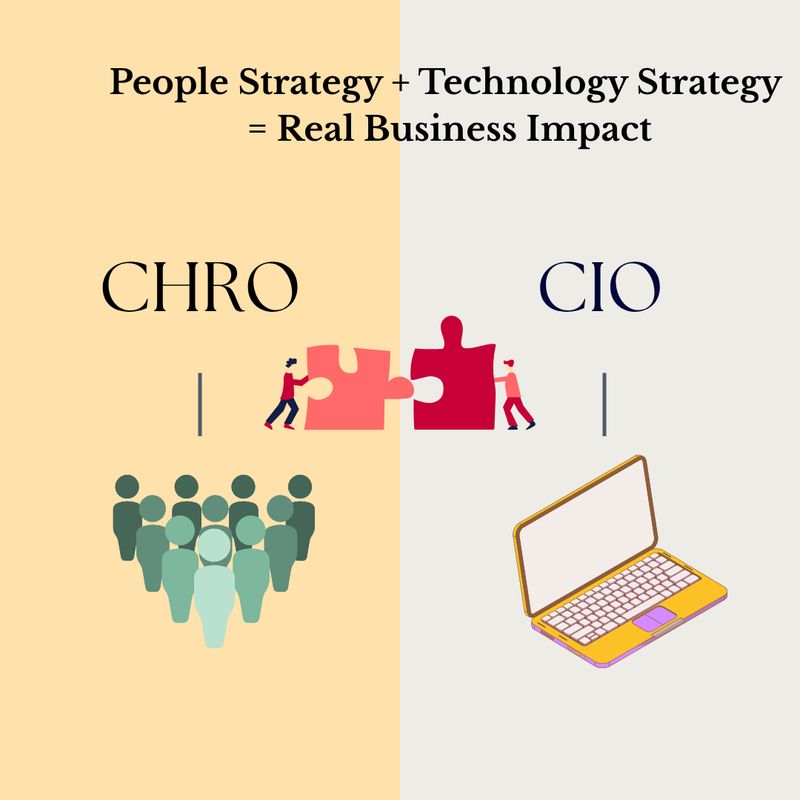
Historically, HR often identified the need for a new technology platform while IT became involved later to handle implementation and integration. That approach worked when HR technology was relatively isolated. Modern HR platforms, however, interact with employee data, identity systems, finance platforms, collaboration tools, enterprise applications, and increasingly AI services.
This means a technology decision made by HR can have consequences across the entire organization. A new HCM platform may need to integrate with payroll, finance, identity management, analytics, collaboration systems, and other enterprise applications. At the same time, the system may contain highly sensitive employee information, making security and privacy essential considerations. CIO and CHRO collaboration therefore helps organizations evaluate HR technology from both the people perspective and the enterprise technology perspective.
The CHRO Brings the Workforce Perspective –
The CHRO understands the business problems that HR technology is expected to solve. This includes improving recruiting, reducing administrative work, developing employees, improving workforce planning, increasing engagement, and creating better employee experiences.
For example, if an organization is considering an AI-powered talent platform, the CHRO can evaluate whether it actually improves how recruiters identify candidates or how employees discover career opportunities. The CHRO can also assess whether employees and managers are likely to adopt the technology and whether the system supports the organization’s broader people strategy.
This perspective is critical because a technically impressive platform can still fail if employees do not understand its value or if it does not fit existing HR processes.
The CIO Brings the Technology Perspectiven –
The CIO evaluates HR technology as part of the broader enterprise technology environment. This means examining integration, architecture, cybersecurity, data governance, scalability, vendor risk, infrastructure requirements, and long-term technology strategy.
The CIO can ask questions that may not be obvious during an HR-led technology evaluation. Can the platform integrate with existing enterprise systems? How will employee data be protected? Does the vendor support the organization’s identity and access management requirements? What happens if the company needs to migrate data later? Will the technology create another isolated data source?
These questions become increasingly important as organizations attempt to reduce fragmented technology environments and create more consistent enterprise data.
HR Technology Is Becoming a Shared Investment –
The traditional view of HR technology as an HR expense is changing. Modern HR systems can influence workforce productivity, employee retention, talent acquisition, skills development, and organizational planning.
This means CIOs and CHROs increasingly need to evaluate HR technology as a business investment rather than simply a departmental software purchase.
Industry data reflects this shift. Evanta’s 2026 CHRO priorities research reports that 50% of CHROs plan to invest in AI solutions, while workforce data and talent analytics, HCM technology, and learning technology also remain important investment areas.
When technology investments directly influence workforce outcomes, HR and IT need shared objectives for measuring whether those investments are delivering value.
AI Is Bringing CIOs and CHROs Closer Together –
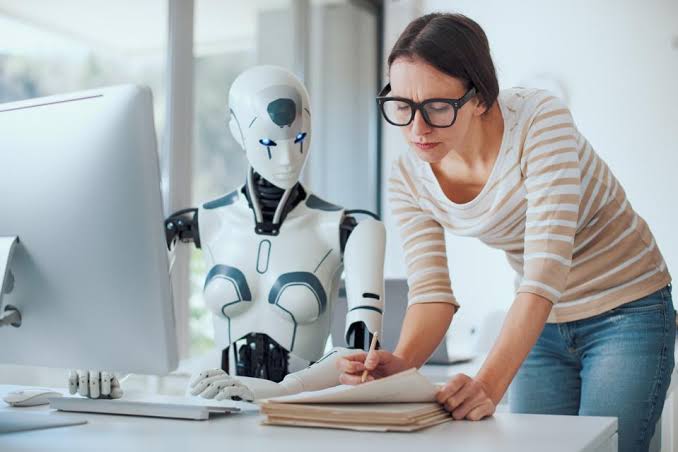
Artificial intelligence is one of the biggest reasons the CIO-CHRO relationship is becoming more strategic. AI can affect recruiting, employee development, workforce planning, performance management, internal mobility, employee support, and many other areas.
However, deploying an AI system is not simply a technology decision. It is also a workforce decision.
Organizations need to determine how employees will interact with AI, which decisions should remain under human control, what skills employees will need, how AI outputs will be evaluated, and how employee trust will be maintained. Gartner describes this emerging challenge as a shared responsibility between technology and HR because AI is increasingly changing both technology environments and the design of work.
This makes CIO-CHRO collaboration particularly important for AI-enabled HR technology.
Data Governance Becomes a Joint Responsibility –
HR systems contain some of the most sensitive information within an enterprise, including employee identities, compensation information, performance data, benefits information, career history, and other workforce records.
As HR technology becomes more interconnected and AI-driven, data governance becomes a shared concern.
The CHRO needs to understand how data supports workforce decisions, while the CIO needs to ensure that the data is stored, accessed, transferred, and protected appropriately. Together, they can establish policies around data ownership, access permissions, retention, privacy, and responsible AI usage.
This is particularly important because trust is a critical component of employee technology adoption. Employees are unlikely to embrace HR technology if they believe their personal information is being used without sufficient transparency or safeguards.
Choosing HR Technology Together –
CIOs and CHROs can also collaborate during vendor selection. Rather than allowing HR to select a platform based primarily on features and allowing IT to evaluate it later, both executives can participate from the beginning.
The CHRO can assess functionality, employee experience, workflow improvements, talent capabilities, and organizational fit. The CIO can assess integration, security, scalability, architecture, data management, and vendor stability.
This joint evaluation can reduce the risk of selecting a platform that looks attractive from one perspective but creates problems from another.
CIO vs. CHRO Responsibilities in HR Technology Investments –
| CIO Focus | CHRO Focus |
|---|---|
| Technology architecture | Workforce strategy |
| Cybersecurity | Employee experience |
| Data governance | Talent management |
| System integration | Recruiting and retention |
| Vendor risk | Learning and development |
| Scalability | Organizational change |
| Identity and access | Employee adoption |
| Technology ROI | Workforce ROI |
The strongest HR technology strategies bring these responsibilities together instead of treating them as separate decisions.
Moving From Technology ROI to Workforce ROI –
One of the biggest changes in HR technology investment is the growing focus on measurable business outcomes. CIOs and CHROs need to move beyond questions such as how much a platform costs or how many employees use it.
They should also ask whether the technology improves business performance.
For example, an AI-enabled recruiting platform might reduce the time required to identify qualified candidates. A learning platform might improve employee skill development. A workforce analytics system might help managers identify skills shortages earlier. An employee experience platform might reduce administrative friction.
These outcomes create a stronger business case because the technology investment becomes connected to measurable workforce and organizational results.
The Importance of Employee Experience –
Employee experience has become another important area of CIO-CHRO collaboration. Employees increasingly expect workplace technology to be as convenient and intuitive as the technology they use in their personal lives.
If employees must navigate disconnected systems, repeatedly enter the same information, or switch between multiple platforms to complete basic HR tasks, technology can create frustration rather than reduce it.
The CIO can help simplify the technology environment, while the CHRO can identify the employee journeys that need improvement. Together, they can prioritize investments that remove friction from important moments such as recruiting, onboarding, learning, career development, and offboarding.
Earlier CIO-CHRO collaboration has already been associated with efforts to improve employee experience, HR platforms, data visibility, and workplace processes.
Integrating HR Technology With the Enterprise –
Another reason CIO-CHRO collaboration matters is that HR technology rarely operates independently.
An organization may have an HRIS connected to payroll, finance, identity management, collaboration software, learning platforms, recruiting systems, and analytics tools. If these systems do not communicate effectively, HR teams can end up with duplicate data, manual processes, inconsistent records, and limited visibility.
The CIO can help establish an architecture that connects HR technology with the wider enterprise technology environment. The CHRO can ensure that these integrations support the organization’s workforce strategy rather than simply creating technical connectivity.
The objective should be a connected employee and data experience rather than a collection of independent HR applications.
Building Shared Governance –
Successful collaboration requires more than occasional meetings between the CIO and CHRO. Organizations need clear governance around major HR technology decisions.
A joint HR-IT steering group can help establish priorities, evaluate investments, resolve conflicts, and monitor implementation. Finance and security leaders can also participate when appropriate.
Shared governance becomes particularly important for AI because organizations need clear answers to questions around accountability, risk, data, human oversight, and employee impact.
Recent research from Cornerstone reported that organizations that co-own workforce readiness between HR and IT act on workforce changes faster, while joint decision-making remains relatively uncommon.
Preparing Employees for New Technology –
Technology implementation does not end when the software goes live. Employees need to understand how the new system changes their work and why the organization made the investment.
The CHRO plays a major role in communication, training, change management, and adoption. The CIO ensures that the technology is reliable, secure, and integrated into the broader environment.
This creates a natural division of responsibilities. IT makes the technology work; HR helps the organization make the technology work for people.
Both sides are necessary.
The Future of CIO-CHRO Collaboration –
The relationship between CIOs and CHROs is likely to become even more important as AI changes the structure of work. HR technology will increasingly influence not just administrative processes but also how organizations identify skills, allocate talent, design jobs, develop employees, and measure workforce performance.
This means the CIO and CHRO will need to collaborate earlier in the technology investment lifecycle. Instead of HR identifying a problem and IT implementing a solution, both leaders can jointly define the problem, evaluate technology options, establish governance, prepare employees, and measure outcomes.
The partnership is moving from implementation collaboration to strategic co-ownership.
Conclusion –
The way organizations invest in HR technology is changing. HR systems are no longer isolated tools used primarily for administrative activities. They are becoming part of the enterprise technology ecosystem and increasingly influence workforce strategy, employee experience, productivity, and organizational transformation.
This makes collaboration between the CIO and CHRO essential. The CHRO brings knowledge of people, talent, culture, and workforce strategy, while the CIO provides expertise in technology, security, data, integration, and scalability.
When these perspectives are combined, organizations can make HR technology investments that are not only technically sound but also strategically valuable. As AI becomes more deeply embedded in HR systems, this partnership will become even more important.
The future of HR technology will not be owned entirely by HR or IT. It will increasingly be shaped by CIOs and CHROs working together to connect technology, people, data, and business outcomes.
“The best HR technology investment is not the system with the most features. It is the system that connects technology capability with workforce outcomes.”
Frequently Asked Questions –
CIOs understand technology architecture, security, data, and integration, while CHROs understand workforce strategy, employee experience, and organizational needs. Collaboration helps organizations evaluate HR technology from both perspectives.
The CIO typically focuses on areas such as cybersecurity, data governance, integration, enterprise architecture, scalability, vendor risk, and technology strategy.
The CHRO focuses on workforce strategy, employee experience, talent management, recruiting, learning, organizational change, and employee adoption.
AI affects both technology and the workforce. CIOs and CHROs increasingly need to work together on AI governance, employee skills, responsible adoption, workforce redesign, data protection, and business outcomes.
Organizations can measure outcomes such as reduced administrative time, faster recruiting, improved employee adoption, better workforce planning, increased productivity, improved internal mobility, and reduced technology complexity.