 B2B Ebookcenter



Agentic AI-washing is becoming an important risk for HR leaders as software vendors increasingly position their products as autonomous AI agents. From recruitment and onboarding to employee support and workforce planning, vendors are promising systems that can reason, make decisions, and execute tasks with minimal human intervention. Yet not every product described as “agentic AI” has these capabilities. Some are conventional chatbots, workflow automation tools, or AI assistants with new branding.
For HR leaders, the challenge is no longer simply identifying where artificial intelligence can improve human resources operations. It is determining whether a product can genuinely perform agent-like work, whether its autonomy is appropriate for HR processes, and whether its benefits justify the investment. Choosing the wrong platform can create unnecessary costs, increase operational complexity, and introduce risks involving employee data, compliance, and decision-making.
Spotting agentic AI-washing requires a more rigorous approach to vendor evaluation. HR teams must look beyond product demonstrations and marketing claims to examine actual capabilities, measurable outcomes, security controls, and accountability. This buyer’s guide explains how to recognize exaggerated promises and make better-informed decisions about agentic AI in HR.
What Is Agentic AI-Washing?

Agentic AI-washing occurs when a vendor exaggerates or misrepresents the autonomous capabilities of an AI product by describing it as agentic AI without demonstrating meaningful agent-like behavior. The term does not necessarily mean that a product is ineffective or that its vendor is deliberately misleading customers. It means the label may promise more than the underlying technology delivers.
A genuine AI agent can work toward a defined goal by interpreting context, selecting actions, using approved tools, evaluating results, and adjusting its approach when circumstances change. Depending on its design, it may retrieve information from enterprise systems, initiate a workflow, identify missing information, or request human approval before completing an action. Its capabilities and level of autonomy should be clearly defined rather than assumed from the word “agent.”
By contrast, a traditional chatbot generally responds to prompts, while rule-based automation executes predefined steps when specified conditions are met. An AI assistant may summarize documents, draft messages, or recommend actions without carrying them out independently. These capabilities can be highly valuable, but they are not automatically evidence of agentic behavior.
The distinction matters because HR buyers may be paying an agent premium for functionality that already exists in their HR information system, applicant tracking system, or automation platform. The objective is not to reject every product that uses the agentic AI label. It is to understand precisely what the product does, how reliably it does it, and what responsibilities remain with HR professionals.
Why Agentic AI-Washing Is a Growing Concern for HR Leaders
HR technology is an attractive market for AI-driven innovation because many processes involve repetitive administrative work, large volumes of information, and interactions across multiple systems. Candidate communications, interview scheduling, onboarding coordination, policy questions, employee service requests, and learning recommendations all appear to be potential candidates for intelligent automation.
However, HR processes are rarely as straightforward as vendor demonstrations suggest. A seemingly simple onboarding task might depend on a signed offer, a background check, the employee’s location, a manager’s approval, equipment availability, and local employment requirements. A system that completes one predefined sequence successfully may struggle when a required document is missing or an exception requires judgment.
Agentic AI-washing can obscure these limitations. A vendor might demonstrate a polished interaction in a controlled environment while leaving unanswered questions about permissions, error recovery, data access, integration reliability, and human oversight. HR teams may discover only after implementation that the system requires extensive manual intervention or cannot handle the exceptions that consume most of their time.
There is also a trust dimension. HR technology affects candidates, employees, managers, and sometimes decisions with significant professional consequences. A product that confidently generates incorrect policy guidance or takes an unauthorized action can damage employee confidence and expose the organization to compliance and reputational risks.
For this reason, HR leaders should evaluate agentic AI as both a technology investment and an operating-model decision. The relevant question is not whether a platform appears intelligent. It is whether the platform can deliver a specific outcome safely, consistently, and accountably in the organization’s real working environment.
Six Warning Signs of Agentic AI-Washing –
1. The Vendor Cannot Explain What the Agent Actually Does –
One of the clearest warning signs is a demonstration full of terms such as autonomous, intelligent, self-directed, and next-generation without a concrete explanation of the system’s behavior. If the vendor cannot describe how the product interprets a task, chooses an action, uses tools, and checks whether the action succeeded, the agentic claim is difficult to validate.
HR leaders should ask for a specific workflow rather than a broad list of features. For example, if a vendor claims its onboarding agent can coordinate new-hire readiness, request a demonstration that begins with an incomplete onboarding record and shows how the system identifies the missing information, contacts the appropriate stakeholder, records the response, and verifies completion.
The demonstration should also clarify where the agent stops. Does it independently update the HRIS, or does it merely suggest an update for an employee to approve? Does it handle exceptions, or does it transfer them to a human? A vendor that can answer these questions precisely is easier to evaluate than one that relies on abstract claims about intelligence.
2. The Product Is Essentially a Chatbot with a New Label –
A conversational interface can make almost any HR platform appear more sophisticated. Employees may type a question in natural language and receive a response generated from a knowledge base. That experience can improve access to information, but it does not necessarily mean the system can execute multi-step tasks.
Consider an employee who asks to update a home address, check the implications for payroll, and confirm whether the change affects benefits administration. A chatbot might explain the relevant procedures. An assistant might prepare the required information. A more capable agent could, within its permissions, initiate the approved updates across connected systems, detect a failed step, and report the final status.
The important distinction is the ability to move from conversation to controlled action. HR leaders should ask vendors to demonstrate the complete workflow, including the system actions performed, the records changed, and the evidence that each step succeeded. A natural-language interface is not proof of autonomous execution.
3. The Vendor Avoids Questions About Exceptions and Failures –
Successful demonstrations often follow a predictable path. Real HR operations do not. Employee records may conflict, approval requests may go unanswered, integrations may fail, and policies may differ by geography or employee category.
A credible vendor should explain what happens when the system encounters these conditions. Can it identify uncertainty? Does it retry a failed operation safely? Can it distinguish between a temporary technical problem and a policy exception? Does it escalate the issue to the correct human rather than inventing an answer or repeatedly attempting the same action?
HR buyers should deliberately introduce unusual scenarios during product evaluations. Ask the vendor to demonstrate what happens when a manager is unavailable, a required document is missing, or two enterprise systems contain conflicting information. The quality of the response often reveals more than a flawless standard demonstration.
4. Autonomy Is Claimed but Permissions Are Unclear –
The word autonomous should never imply unrestricted access to employee information or unrestricted authority to make changes. An HR agent may need access to sensitive personal information, compensation data, performance records, or recruitment systems. Its access must be limited to what is necessary for its assigned responsibilities.
Ask vendors how permissions are inherited, how actions are authorized, and how access is revoked when an employee changes roles or leaves the organization. Find out whether the agent can act only on approved records, whether sensitive operations require additional authorization, and whether its activities are captured in auditable logs.
If the vendor cannot explain the boundaries of the agent’s authority, the organization cannot properly assess its risk. Genuine agentic capability should come with clear controls over what the system may read, decide, change, and communicate.
5. ROI Claims Are Not Supported by Verifiable Evidence –
Claims about reducing administrative workload by 50%, accelerating recruitment, or improving employee productivity may sound compelling. However, a percentage without a baseline, measurement period, sample size, and explanation of the workflow is not enough to support an investment decision.
A product might reduce the time needed to draft candidate communications while leaving interview coordination, approvals, and candidate follow-up largely manual. If the vendor measures only the drafting task, the reported productivity improvement may not translate into a meaningful reduction in end-to-end recruitment time.
HR leaders should ask for evidence from comparable organizations and distinguish between pilot results, customer-reported outcomes, and independently validated findings. Most importantly, they should establish their own baseline and success criteria before starting a pilot. Measurable outcomes could include end-to-end processing time, manual interventions per case, error rates, employee satisfaction, and cost per completed transaction.
6. Human Oversight Is Treated as an Optional Detail –
An agent that can execute actions needs more than a general promise that a human can intervene. HR leaders should understand which decisions require approval, which actions can be reversed, how escalations occur, and who is accountable when an action causes harm.
This is particularly important in recruitment, performance management, compensation, promotion, and termination-related processes. A system that autonomously schedules an interview is operating in a different risk category from one that ranks candidates or recommends employment decisions.
A credible product should support oversight appropriate to the consequences of each task. That includes clear escalation paths, explainable records of actions, access to relevant evidence, and the ability to suspend or disable the agent when necessary. Human oversight must be built into the workflow rather than added as a vague assurance in the sales presentation.
3 Key Red Flags HR Leaders Should Watch For –

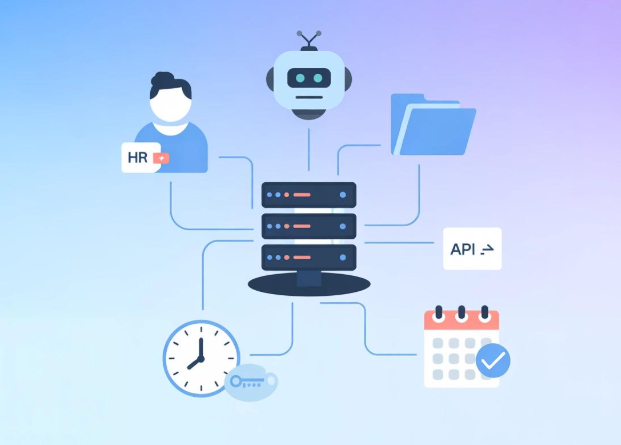
Chatbots Disguised as AI Agents
A conversational interface does not prove autonomy. Check whether the tool can execute approved actions across connected HR systems or simply provide answers and recommendations.
No Proof of Real-World Performance
Be cautious of impressive demos without measurable results. Ask vendors to demonstrate exception handling, failed-task recovery, and outcomes from realistic HR workflows.
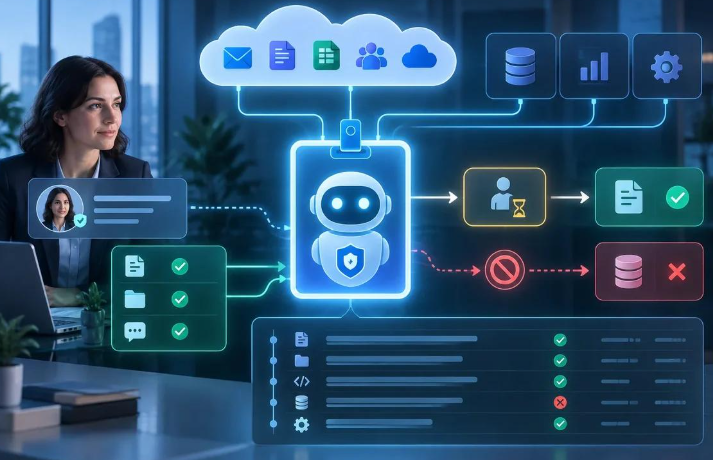
Unclear Security and Human Oversight
An AI agent must operate within defined permissions. Verify access controls, audit logs, approval requirements, and escalation procedures before deployment.
Traditional Automation vs. AI Assistants vs. Agentic AI –
Understanding the differences between common technology approaches helps HR teams identify whether a vendor’s description matches the product’s actual capabilities.
| Capability | Traditional automation | AI assistant | Agentic AI system |
|---|---|---|---|
| Primary approach | Executes predefined rules and steps | Interprets requests and generates responses or recommendations | Works toward a defined goal using approved actions and feedback |
| Handles variation | Limited to programmed conditions | Can interpret varied language and context, depending on design | May adapt its actions to changing conditions within defined boundaries |
| Takes action | Executes configured workflow steps | Often prepares or recommends actions | Can execute authorized actions through connected tools |
| Multi-step tasks | Possible when explicitly configured | May guide a person through multiple steps | Can coordinate multiple steps and check results, subject to system design |
| Failure handling | Follows configured exception paths | Explains or suggests next steps | May retry, adjust, or escalate when an error or exception occurs |
| Human oversight | Typically configured through workflow rules | Commonly relies on user review | Should be risk-based, with clear approval and escalation controls |
| Best-fit HR examples | Payroll notifications and standard reminders | Policy Q&A and job-description drafting | Controlled onboarding coordination or employee-service workflows across systems |
These categories are not mutually exclusive. A modern HR product may combine rules, generative AI, integrations, and agent-like orchestration. An agent may also depend on conventional automation to execute reliable, repeatable steps. The buyer’s task is to assess the complete system and its demonstrated behavior, not to insist that every product fit a single technical category.
Seven Questions HR Leaders Should Ask Before Buying Agentic AI –
Vendor evaluations should focus on evidence rather than terminology. The following questions can help HR, IT, security, procurement, and legal teams establish a shared understanding of the proposed system.
1. What specific tasks can the agent complete without human intervention? Ask the vendor to distinguish between generating a recommendation, preparing an action, initiating a workflow, and completing an action in a connected system.
2. Which systems can it access, and what permissions does it require? Request details about integrations, role-based access, data segregation, authentication, and how the agent’s permissions are controlled.
3. How does it respond to missing information, conflicting records, or unexpected conditions? Request a live demonstration of failure handling, escalation, and recovery rather than relying on a product roadmap.
4. How are its actions logged and audited? Confirm whether the organization can identify what the agent did, when it acted, which data it used, and whether a human approved the action.
5. What prevents it from taking an unauthorized or inappropriate action? Ask about policy enforcement, approval gates, tool restrictions, monitoring, and emergency shutdown procedures.
6. What evidence supports the claimed business outcomes? Request measurable results from comparable deployments, with clear definitions of the baseline, measurement period, and remaining human workload.
7. How will the vendor maintain and improve the system after deployment? Clarify who monitors performance, manages model or workflow changes, tests updates, investigates incidents, and communicates changes that could affect HR processes.
The answers should be documented in the evaluation process. This creates a defensible record for procurement and helps prevent different stakeholders from making decisions based on different interpretations of the same product claims.
How to Run an Agentic AI Pilot That Reveals the Truth –
A structured pilot is one of the most effective ways to separate real capabilities from marketing language. Instead of testing a broad promise such as “transform the employee experience,” select a narrow, repeatable workflow with clear boundaries and measurable outcomes.
Employee-service request routing is one possible starting point. The agent might classify incoming requests, retrieve approved policy information, identify missing details, direct the request to the right team, and report its status. The pilot should test routine requests as well as ambiguous cases, policy exceptions, incorrect information, and unavailable integrations.
Before the pilot begins, establish a baseline for processing time, accuracy, manual intervention, escalation frequency, and employee satisfaction. Define acceptable thresholds and specify which actions the agent may take independently. For example, it might be allowed to route requests and draft responses while requiring approval before changing an employee’s official record.
Run the system in a controlled environment or limited production setting, depending on the risk of the workflow. Compare the agent’s performance against the existing process and document both successful and unsuccessful outcomes. Include the time employees spend reviewing results, correcting mistakes, and resolving escalations; otherwise, apparent automation gains may simply shift work to another team.
At the end of the pilot, assess three dimensions: capability, control, and value. Capability determines whether the product can reliably complete the intended work. Control measures whether it respects permissions and handles failures appropriately. Value determines whether the improvement justifies the total cost of implementation, integration, monitoring, and ongoing governance.
Where Agentic AI Can Deliver Real Value in HR –
Not every HR process needs an agent. The strongest use cases are generally those with clearly defined objectives, accessible and reliable data, predictable actions, and manageable consequences when something goes wrong.
Employee-service coordination can be a practical starting point because requests often involve retrieving policy information, collecting missing details, routing work, and tracking resolution. An agent can help coordinate these steps while escalating sensitive or ambiguous requests to an HR professional.
Onboarding coordination is another promising area. A system may monitor task completion, remind stakeholders, identify missing documents, and coordinate approved activities across HR, IT, and facilities. However, the organization should distinguish administrative coordination from legal verification or decisions requiring professional judgment.
Recruitment operations may benefit from interview scheduling, candidate communication, application-status updates, and coordination between recruiters and hiring managers. These tasks can reduce administrative burden when properly controlled. By contrast, autonomous candidate ranking or employment recommendations require more careful scrutiny because they can affect access to opportunities and introduce risks of discrimination or unfair treatment.
Learning and development teams may also use agents to coordinate learning plans, find relevant internal resources, and follow up on required training. Any recommendations based on employee performance or career progression should be transparent, appropriately validated, and subject to suitable human review.
The guiding principle is to begin with workflows where errors are detectable, actions are reversible, and success is measurable. Expand autonomy only when the organization has evidence that the system performs reliably and its controls remain effective.
The Hidden Costs Behind Agentic AI-Washing –
The purchase price of an AI platform rarely captures the full cost of deploying an agentic system. Integrations may require additional engineering work, enterprise data may need to be cleaned, and existing workflows may need redesigning before the agent can operate reliably. Security assessments, employee training, governance, and ongoing monitoring also require resources.
There may be indirect costs as well. If an agent creates incorrect records, sends inappropriate messages, or repeatedly escalates routine requests, HR teams can spend significant time correcting its output. Employees may also lose confidence in HR services if automated interactions are confusing or difficult to challenge.
Vendor lock-in is another consideration. Before committing to a platform, organizations should understand how easily they can export relevant data, review action histories, replace integrations, and transition to another solution. They should also clarify how changes to underlying models or third-party services are managed and whether those changes could affect performance.
A realistic business case therefore measures the total cost of ownership rather than comparing subscription prices alone. The most valuable system is not necessarily the one with the most impressive autonomy. It is the one that delivers dependable outcomes at an acceptable cost and risk level.
A Practical Framework for Evaluating Agentic AI Vendors –
HR leaders can make vendor comparisons more consistent by using a weighted scorecard. The scores should be based on evidence from demonstrations, technical documentation, security reviews, pilot results, and contractual commitments—not on marketing materials alone.
| Evaluation area | Suggested weight | What good evidence looks like |
|---|---|---|
| Demonstrated task capability | 25% | Completes the target workflow, including realistic exceptions |
| Security and permissions | 20% | Documented access controls, restricted actions, and appropriate data protection |
| Governance and oversight | 20% | Auditable actions, approval gates, escalation paths, and incident controls |
| Integration and reliability | 15% | Verified connections, error handling, and consistent execution |
| Measurable business value | 15% | Credible baseline comparison and quantified outcomes |
| Transparency and vendor support | 5% | Clear documentation, change management, and defined support responsibilities |
| Total | 100% |
Use a consistent rating scale, such as 1 to 5, for each category and multiply each rating by its assigned weight. Treat critical security, privacy, and legal requirements as mandatory gates rather than allowing a high overall score to compensate for a serious deficiency. A vendor with excellent productivity claims should not pass evaluation if it cannot provide acceptable access controls or auditability.
The scorecard should also reflect the proposed use case. An employee-facing policy assistant and a system that influences hiring decisions do not carry identical risks. HR, IT, information security, legal, and procurement teams should agree on the evaluation criteria before the vendor assessment begins.
Common Mistakes to Avoid When Evaluating Agentic AI –
One mistake is assuming that greater autonomy automatically means greater value. In HR, a system that requires approval for sensitive actions may be more useful than one that acts independently but creates additional risk. The appropriate level of autonomy depends on the workflow, not the novelty of the technology.
Another mistake is accepting a successful demonstration as proof of production readiness. A controlled demonstration may use prepared data, a limited number of integrations, and carefully selected scenarios. Buyers should ask to see representative cases, test exceptions, and validate claims through a pilot.
Organizations also make the mistake of evaluating the technology without examining the surrounding process. An agent cannot reliably coordinate a fragmented workflow if ownership is unclear, source data is inconsistent, or approval rules are contradictory. Some organizations will need to improve process design and data quality before introducing more advanced automation.
Finally, HR teams should avoid assigning ownership entirely to IT or entirely to HR. IT and security teams can assess architecture, access, and resilience, while HR understands policy, employee experience, and operational exceptions. Procurement and legal teams contribute contractual and compliance perspectives. A cross-functional approach makes it more likely that the solution will be safe, useful, and sustainable.
The Future of Agentic AI in HR: From Hype to Accountable Autonomy –
As AI capabilities evolve, the distinction between assistants, workflow automation, and agents may become less clear at the product level. Enterprise platforms will increasingly combine language models, rules engines, retrieval systems, application integrations, and orchestration layers. Some products will offer genuine agent-like capabilities for specific tasks while relying on conventional automation for others.
This makes transparent capability descriptions more important, not less. HR leaders will need to evaluate individual workflows, permitted actions, performance evidence, and governance controls instead of treating “agentic AI” as a single product category with a uniform level of capability.
Organizations should also expect greater attention to accountability. As agents gain the ability to change records, communicate with employees, and coordinate work across applications, buyers will need clear ownership of system behavior, incident response, data handling, and ongoing performance. Vendor contracts and internal policies should define responsibilities for monitoring, updates, failures, and disputed outcomes.
The most successful HR teams will not necessarily be those that automate the largest number of tasks. They will be those that choose suitable use cases, introduce autonomy incrementally, and maintain the human judgment needed for sensitive decisions. In this environment, trust will be earned through demonstrated performance and reliable controls rather than impressive terminology.
“The real test of agentic AI is not how independently a system can act, but how reliably it delivers the right outcome within the right boundaries.”
Frequently Asked Questions (FAQs) –
Agentic AI-washing is the practice of overstating a product’s autonomous capabilities by marketing it as agentic AI without sufficient evidence. It can occur when a chatbot, AI assistant, or conventional workflow automation tool is described as an autonomous agent even though it cannot reliably plan, execute, and verify the relevant tasks.
Ask the vendor to demonstrate a complete workflow involving real actions, connected systems, exception handling, and result verification. Confirm what the system does independently, what requires approval, and how its actions are recorded. A credible evaluation should include realistic failures, not just a successful standard demonstration.
Agentic AI can be appropriate for selected HR workflows when the system has limited permissions, suitable security controls, audit logs, clear escalation paths, and effective human oversight. The level of control should reflect the consequences of the task. Activities that affect hiring, compensation, performance, or employment status require particularly careful assessment.
Employee-service request routing, onboarding coordination, interview scheduling, and routine administrative follow-ups can be reasonable starting points. These workflows often have defined objectives and measurable outcomes. Organizations should begin with controlled tasks and expand autonomy only after validating reliability, security, and business value.
Measure end-to-end processing time, task completion rate, accuracy, manual intervention, exception frequency, employee satisfaction, and total operating cost. Establish baseline figures before implementation and include the time needed to review or correct the agent’s work. This helps distinguish genuine productivity improvements from work that has merely shifted to another team.
Conclusion –
Agentic AI offers HR leaders opportunities to improve service delivery, coordinate complex workflows, and reduce administrative effort. However, the growing popularity of the term also creates a risk that buyers will confuse sophisticated marketing with demonstrated capability.
Spotting agentic AI-washing requires asking precise questions, testing real-world scenarios, verifying integrations, assessing permissions, and measuring outcomes against an established baseline. It also requires recognizing that autonomy is not a goal in itself. The right level of independence depends on the task, the consequences of failure, and the organization’s ability to maintain effective oversight.
For HR leaders, the smartest buying strategy is to start with a specific operational problem, require evidence that the proposed system can solve it, and expand only when the results justify doing so. Vendors should be judged by what their systems demonstrably accomplish—not by how often they use the word agentic.