



Multimodal search is changing how customers discover products, compare brands, and find information online. Instead of relying exclusively on typed keywords, customers can now search using images, spoken questions, screenshots, videos, and combinations of text and visual information. They can photograph a product they like, describe what they need aloud, or upload an image and ask an AI assistant to find similar options. Search is becoming less dependent on how accurately people describe something in words and more capable of understanding what they actually want.
For businesses, this shift represents a significant change in digital discovery. Traditional search engine optimization has focused heavily on keywords, backlinks, page relevance, and technical website performance. These elements remain important, but they are no longer the entire picture. Brands must increasingly consider whether their products, services, and content can be discovered through visual recognition, conversational language, contextual understanding, and AI-powered search experiences.
The implications extend across e-commerce, travel, real estate, healthcare information, education, B2B procurement, and customer support. A shopper might upload a photograph of a chair and search for a similar design. A procurement manager might photograph a machine component and ask for compatible replacements. A traveler might use a voice query to find a family-friendly hotel near a particular attraction. In each case, the search begins with a different form of input, but the user’s underlying goal is the same: find the most relevant answer with the least possible effort.
As AI systems become better at interpreting text, images, audio, and video together, companies must rethink how they organize information and present it to potential customers. The question is no longer simply whether a webpage ranks for the right keyword. It is whether the business can be understood, matched, and recommended when customers express their needs in different ways.
What Is Multimodal Search?

Multimodal search is a search approach that allows users to retrieve information using more than one type of input, such as text, images, voice, audio, or video. Depending on the platform, customers may use one modality at a time or combine several inputs in a single request. AI models then interpret the available signals to identify the user’s intent and retrieve relevant results.
Traditional text search depends primarily on the words a person enters. If someone searches for “black leather office chair with adjustable arms,” the search engine compares the query with indexed content, product attributes, and other relevance signals. This works well when users know the terminology and can describe what they want. However, it becomes less effective when they recognize an object visually but do not know its name, category, model, or technical specifications.
Multimodal search reduces this gap by allowing users to communicate through the information they already have. A customer can upload a chair photograph and add the words “similar style under ₹15,000.” The image provides visual information about shape, color, and design, while the text supplies price and preference constraints. The search system combines these signals to produce more relevant results than either input might provide alone.
Voice search adds another dimension. Spoken queries often resemble natural conversation rather than carefully selected keywords. Instead of typing “CRM software manufacturing,” a business buyer might ask, “Which CRM platforms work well for a mid-sized manufacturing company with a field sales team?” AI-powered search can interpret the intent behind the longer question and retrieve information that addresses the specific requirements.
Multimodal search is not a single technology or a universal search interface. It is an umbrella term covering capabilities such as visual search, speech recognition, semantic retrieval, image-text matching, and multimodal AI reasoning. The exact experience depends on how the search platform combines these capabilities, the quality of its underlying data, and the types of content it can access.
Why Customer Search Behavior Is Moving Beyond Keywords –
Customers have always used more than words to understand the world around them. They recognize products by appearance, identify objects from their surroundings, ask questions aloud, and use examples to explain what they want. Digital search historically placed much of the burden on users to translate those needs into text that a search engine could interpret.
AI is beginning to reduce that burden. Image recognition can help connect a photograph with visually similar products, while language models can interpret conversational requests and contextual constraints. Speech technologies make it easier to search while walking, driving, working with equipment, or using a mobile device. When these capabilities work together, customers can move from recognizing a need to finding a potential solution more naturally.
Several factors are contributing to this transition. Smartphone cameras make image-based discovery convenient, while voice assistants and conversational AI interfaces encourage users to ask questions in ordinary language. Social platforms also expose consumers to products through photographs and short videos, creating situations where people want to find an item they have seen rather than search for a product category from scratch.
The shift is also influenced by expectations. Customers increasingly want results that reflect their context, preferences, and immediate objectives. A generic list of webpages may be less useful than a set of products matching a photograph, a spoken requirement, and a defined budget. Users expect search to help interpret the need rather than merely match the wording.
However, traditional search remains essential. Many customers still prefer typing specific product names, model numbers, technical terms, or detailed requirements. Multimodal search expands the available methods rather than eliminating text-based discovery. Businesses should therefore build experiences that support multiple search behaviors instead of replacing one optimization strategy with another.
The Three Core Inputs Transforming Search –
Multimodal search brings together three especially important forms of customer input: visual information, spoken language, and typed text. Each reveals different aspects of intent, and the strongest search experiences use those differences to improve relevance.
1. Image Search: When Customers Can Show What They Want –
Image-based search allows users to upload photographs, screenshots, or other visual references to find related information. A shopper might photograph a pair of shoes, a lamp, a handbag, or a home décor item and ask a search engine to locate similar products. Instead of describing every visible feature, the customer provides a visual example that the system can analyze.
AI-powered visual search can identify objects, colors, patterns, shapes, and other image features, then compare them with indexed product images or visual representations. Some systems can also combine the image with text to narrow results by brand, price, size, or intended use. The quality of the experience depends on factors such as image quality, product catalog coverage, visual similarity, and the availability of accurate product attributes.
For retailers, this creates a strong reason to improve product imagery and catalog structure. Clear photographs from multiple angles, consistent lighting, descriptive alt text, accurate product titles, and detailed attributes can help both people and search systems understand what is being offered. Visual search does not rely on alt text alone, but descriptive metadata and accessible page content provide useful supporting context.
2. Voice Search: When Customers Ask Instead of Type –
Voice search enables users to speak their queries rather than enter them through a keyboard. This often produces longer, more conversational requests that include a question, a preference, or a practical constraint. Customers might ask for a nearby service, request a product recommendation, or describe a problem they want to solve.
Voice-enabled search commonly involves speech recognition to convert spoken input into text or another machine-readable representation. The search system then interprets the request and retrieves relevant information. More advanced conversational experiences can use context from previous turns to refine the results, such as narrowing a hotel search after the user specifies a budget or changing a product recommendation after a size preference is added.
Businesses can improve their readiness for voice search by creating clear, conversational content that directly answers common customer questions. Product details, service availability, location information, FAQs, and straightforward explanations become especially useful when a user asks a complete question. Fast-loading mobile pages and technically accessible content also support a better search experience.
3. Text Search: The Foundation Still Matters –
Text remains a critical part of multimodal search because it communicates precise requirements, terminology, and constraints. A user may upload an image of a running shoe and add “wide fit, suitable for trail running, under ₹8,000.” The image helps establish visual intent, while the text clarifies what the customer needs the product to do.
Text can also disambiguate images and voice requests. A photograph might contain several objects, but a typed instruction can identify the relevant one. Similarly, a spoken request such as “find something like this” becomes more useful when the customer supplies an image or additional details. In many experiences, text provides the precision that makes visual or conversational discovery commercially actionable.
For businesses, this means conventional SEO fundamentals remain valuable. Accurate titles, descriptive headings, relevant page content, internal links, structured product information, and clear terminology help search systems understand the business. The difference is that these text signals increasingly operate alongside visual and conversational information rather than in isolation.
How Multimodal Search Works Behind the Scenes –
Although implementations vary, multimodal search usually combines several stages: input processing, feature representation, retrieval, ranking, and result presentation. Understanding these stages helps businesses identify where improvements to their content, product data, or digital infrastructure can make a difference.
The first stage is input interpretation. An image may be analyzed to identify objects and visual characteristics, while voice input may be processed through speech recognition and language understanding. Text is interpreted for entities, intent, relationships, and constraints. When a request combines inputs, the system must determine how each signal contributes to the overall search objective.
The next stage involves representing the input in a form that can be compared with available content. Some systems use embeddings, which are numerical representations designed to capture useful relationships between items. Text and images may be mapped into a shared representation space, allowing a search system to identify products or documents that are semantically or visually related to a query. Not every platform uses the same architecture, and embeddings are only one part of a larger retrieval system.
The system then retrieves potential matches from an index or catalog. Depending on the application, this may involve keyword search, vector similarity search, image matching, structured filters, or a combination of methods. A hybrid approach can be particularly useful because it combines exact matches, such as a product model number, with semantic or visual similarity.
Finally, a ranking process orders the retrieved results according to relevance and other applicable signals. These might include the user’s constraints, product availability, location, freshness, or platform-specific quality criteria. The interface presents the results and may allow the user to refine the request through follow-up questions.
A multimodal system is only as useful as the information it can retrieve. If product images are missing, inventory details are outdated, or technical documents are poorly indexed, sophisticated AI may still return irrelevant results. Businesses should therefore treat multimodal search as both an AI capability and a data quality challenge.
How Multimodal Search Changes E-Commerce and Product Discovery –
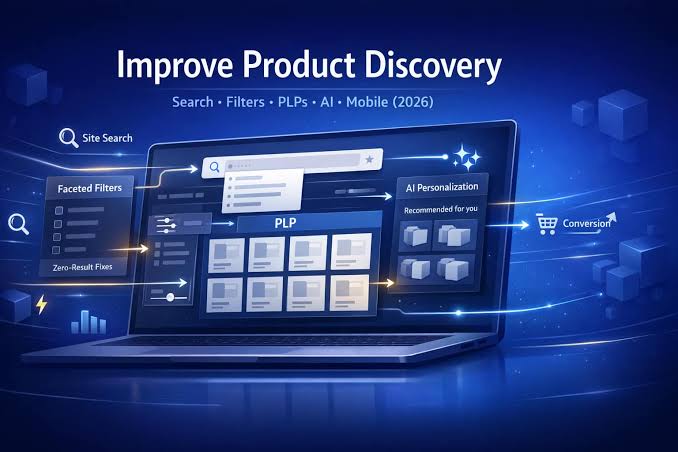
E-commerce is one of the clearest applications of multimodal search because customers frequently discover products through appearance, inspiration, and comparison. A person may see a sofa in a social media post, photograph a product in a physical store, or capture a screenshot from a video. They may know the style they want without knowing the right search terms.
Visual search can turn that inspiration into a product discovery journey. A customer can submit a photograph, find similar items, and then narrow the results by material, size, price, or availability. Adding conversational capabilities can make the experience more flexible: the customer might ask for a similar design that fits a smaller room or a more affordable alternative with comparable features.
For retailers, the opportunity extends beyond matching pictures. Product discovery can become more context-aware, helping users move from a vague preference to a shortlist of suitable products. The system may need to consider the difference between visual similarity and functional suitability. Two chairs might look alike but have different weight limits, dimensions, or ergonomic features. A relevant result must account for these distinctions rather than prioritizing appearance alone.
Product data becomes a strategic asset in this environment. Catalogs should include accurate titles, categories, dimensions, materials, colors, compatibility details, prices, and inventory status. Images should be consistent and sufficiently detailed to show meaningful product characteristics. Businesses should also monitor whether search results remain useful across different image qualities, device types, and customer preferences.
The commercial objective is not simply to produce more matches. It is to help customers find products that fit their needs, reduce unnecessary search effort, and move confidently toward a purchase. Businesses should evaluate multimodal discovery using measures such as successful searches, product engagement, add-to-cart rates, conversion, and returns. A high click-through rate is not enough if the recommendations fail to meet customer expectations.
Multimodal Search in B2B: A Less Obvious but Valuable Opportunity –
Multimodal search is not limited to consumer shopping. Business buyers often work with complex product catalogs, technical documents, specifications, diagrams, and physical equipment. They may need to identify a component, find a compatible replacement, locate a maintenance procedure, or determine whether a supplier offers a product that meets a precise requirement.
Consider a manufacturing engineer who photographs a worn machine component but does not know its exact part number. A search tool could use the image to identify visually similar components, while additional text supplies dimensions, operating conditions, or equipment details. The system could then retrieve candidate parts, technical datasheets, and compatibility information. Human verification may still be necessary, especially when incorrect matching could create safety or operational risks.
In enterprise software procurement, a buyer might describe a workflow problem, upload a screenshot of an existing system, and ask for platforms that support specific integrations. Multimodal retrieval could help connect the visual reference with product documentation, implementation guides, and feature descriptions. This would be especially useful when the buyer does not know the exact technical terms used by vendors.
Internal enterprise search is another important application. Employees often need information distributed across PDFs, presentations, scanned documents, images, diagrams, and knowledge bases. A multimodal search system can help users locate relevant content even when the information is not expressed in the same words as the original query. For example, a technician could search with a photograph of an equipment warning and retrieve relevant troubleshooting documents.
However, B2B applications require stronger attention to access control, accuracy, and traceability. Search results must respect document permissions, and technical recommendations should link to authoritative sources. Where compatibility, safety, regulatory requirements, or financial commitments are involved, businesses should make uncertainty visible and keep qualified professionals involved in final decisions.
The SEO Shift: Optimizing for More Than Keywords –
Multimodal search expands the signals businesses should consider when making content discoverable. It does not make traditional SEO obsolete, nor does it guarantee that a page will appear in a visual or AI-powered result. Instead, it increases the importance of presenting information in formats that are clear, accessible, accurate, and consistent across a website.
For image discovery, businesses should use descriptive filenames, meaningful alt text, relevant surrounding copy, and high-quality images that genuinely represent the item or concept. E-commerce sites should provide multiple useful product views and maintain consistency between images, product titles, descriptions, and structured attributes. Alt text should explain the image’s relevant content for users who cannot see it, not function as a place to stuff keywords.
For conversational search, content should address the questions customers actually ask. Clear headings, direct explanations, useful FAQs, and well-organized service or product information make pages easier to navigate and interpret. Natural language should be used where it improves clarity, but businesses should avoid creating repetitive pages simply to target every possible question variation.
Structured data can help search engines interpret supported information about products, organizations, articles, and other entities. It must accurately reflect visible page content and comply with the relevant search platform’s requirements. Structured data is not a guarantee of ranking or inclusion, but it can reduce ambiguity about the information a page contains.
Businesses should also strengthen their overall technical foundations. Search engines and AI-powered systems need access to relevant content, while users need pages that load reliably on mobile devices and provide a good experience. Internal links, clean site architecture, appropriate indexing controls, and consistent product information all contribute to discoverability.
Most importantly, businesses should avoid treating multimodal SEO as a checklist of isolated tactics. A perfectly named image cannot compensate for an inaccurate product catalog, and an FAQ section cannot compensate for missing or unhelpful answers. The objective is to make the underlying information genuinely useful and understandable.
Comparison: Traditional Search vs. Multimodal Search –
| Feature | Traditional text search | Multimodal search |
|---|---|---|
| Primary inputs | Typed words and phrases | Text, images, voice, and potentially video |
| User effort | Requires users to describe their needs in words | Lets users show, say, or combine their requirements |
| Intent interpretation | Often relies on keywords, semantics, and context | Can combine linguistic, visual, and audio signals |
| Typical applications | Web search, keyword lookup, product queries | Visual shopping, voice assistance, document discovery |
| Data requirements | Text content, metadata, indexes, and structured information | Text plus relevant image, audio, or video data and metadata |
| Main business challenge | Matching content to query intent | Combining different signals accurately and safely |
| Measurement | Rankings, impressions, clicks, and conversions | Traditional metrics plus modality-specific search success and relevance |
Neither approach is universally better. Text search can be more effective for exact identifiers, model numbers, technical terms, and carefully defined queries. Multimodal search becomes particularly valuable when customers have visual references, use natural speech, or need to combine several constraints. A well-designed search experience may use both approaches behind the scenes.
Key Challenges Businesses Must Solve –
Despite its potential, multimodal search introduces challenges that companies should address before deploying it at scale.
- Inconsistent and Incomplete Data –
Product catalogs, document repositories, and content management systems often contain missing metadata, outdated descriptions, duplicate records, and inconsistent naming conventions. These problems can undermine retrieval quality regardless of how advanced the underlying AI model is. Businesses should establish data ownership, validation processes, and consistent attributes for the information they want to make searchable.
- Ambiguous Visual Matches –
An image may contain several objects, obscure important details, or show an item from an unusual angle. Visually similar products may differ in ways that matter to the customer, such as dimensions, materials, compatibility, or safety ratings. Search systems should combine visual similarity with structured attributes and clearly distinguish candidate matches from verified matches.
- Accent, Language, and Speech Recognition Issues –
Voice search can struggle with background noise, unfamiliar names, technical vocabulary, accents, and multilingual speech. Businesses serving diverse audiences should test voice experiences with representative users and avoid assuming that a single language or accent pattern covers every customer. Alternative text input and clear error recovery remain important.
- Privacy and Security –
Images and audio may contain faces, locations, documents, personal details, or confidential business information. Organizations need clear data-handling policies, appropriate consent where required, secure storage, retention limits, and controls on how submitted content is processed. Enterprise search must also preserve permissions so that a user cannot retrieve confidential information simply by asking a different question or uploading an image.
- Cost, Latency, and Scalability –
Processing images, audio, and complex combinations of inputs can require more computational resources than a straightforward text query. Large catalogs and enterprise document repositories introduce additional indexing and retrieval costs. Businesses should identify the use cases where multimodal capabilities provide clear value, optimize retrieval pipelines, and monitor latency and operating costs alongside relevance.
How to Prepare Your Business for Multimodal Search –
A practical adoption strategy starts with customer behavior rather than technology selection. Businesses should identify where customers struggle to describe what they want, where visual or spoken information already influences discovery, and which search failures create meaningful commercial or operational costs. These findings help prioritize the applications most likely to benefit from multimodal capabilities.
Step 1: Audit existing search behavior. Review website search logs, customer support questions, failed searches, product discovery paths, and feedback from sales or service teams. Look for repeated cases where users cannot find an item because they do not know its name, where search terms differ from the terminology used in the catalog, or where users need to describe a visual reference.
Step 2: Improve the information foundation. Clean product data, standardize important attributes, improve image quality, and organize documents with useful metadata. For enterprise repositories, verify ownership, access permissions, version control, and document freshness. These improvements benefit traditional search as well as multimodal retrieval.
Step 3: Choose a focused pilot. Start with a specific use case, such as visual product discovery, voice-enabled FAQs, technical document retrieval, or component identification. Define a baseline and establish measurable targets before implementation. A narrow pilot makes it easier to compare performance, identify failure modes, and determine whether the additional complexity is justified.
Step 4: Combine retrieval methods where appropriate. Depending on the use case, a system may need keyword search, filters, vector retrieval, visual similarity, and reranking. Exact identifiers should remain searchable, while semantic and visual matching can help users who do not know the right terminology. The architecture should reflect the real information and decision requirements rather than adopting every available technique.
Step 5: Test with realistic users and inputs. Evaluate photographs with different lighting and angles, voice requests with different accents, mixed-language queries, ambiguous requests, and incomplete information. For B2B systems, include technical edge cases and access-control tests. Measure not only whether a result was returned but whether it was correct, useful, and appropriate to the user’s permissions.
Step 6: Monitor, learn, and improve. Use search analytics and user feedback to identify unsuccessful queries, irrelevant matches, repeated refinements, and abandoned sessions. Review cases where the system returns a confident but incorrect answer, and improve the underlying data or retrieval logic. Continue to assess privacy, security, performance, and operating costs as usage grows.
How to Measure Multimodal Search Performance –
Businesses should not evaluate multimodal search using clicks alone. A result can attract attention without satisfying the user’s need, and a low-click session may still be successful if the customer quickly finds the correct information.
Useful metrics include search success rate, the percentage of queries that lead to a relevant result or completed task; zero-result rate, which reveals queries the system cannot satisfy; query refinement rate, which indicates how often users must repeatedly adjust their requests; and time to successful result, which measures how efficiently people find what they need. These measures should be interpreted in context because a complex research task may naturally take longer than a simple product lookup.
Commercial outcomes also matter. Retailers can monitor product engagement, add-to-cart rates, conversion rates, and returns associated with search-assisted discovery. B2B organizations can measure time spent locating technical documentation, successful part identification, support resolution time, and the frequency of incorrect retrievals. For voice experiences, speech recognition quality and successful task completion are useful additional indicators.
Evaluation should include relevance and correctness checks, not just business outcomes. Teams can use representative test queries, human judgments, and carefully designed experiments to compare the new experience with existing search. Where possible, controlled testing can help determine whether the improvement comes from multimodal search itself or from other changes made during implementation.
The Future of Search: From Finding Information to Expressing Intent –
Multimodal search is part of a broader shift toward interfaces that let people express their goals more naturally. Instead of adapting every request to the limitations of a search box, users can combine images, spoken instructions, text, and follow-up questions to clarify what they need. This can make digital discovery more flexible, especially when customers are unfamiliar with the terminology of a product or domain.
As AI systems improve, search experiences may become more conversational and task-oriented. A user could submit a photo of a room, describe a preferred style, specify a budget, and ask for furniture options that fit the available space. A technician might upload a machine image, provide a short description of a fault, and retrieve relevant documentation and compatible components. These experiences could reduce the distance between identifying a problem and taking the next useful step.
The same evolution will place greater responsibility on businesses to maintain accurate, well-governed information. When search systems combine multiple signals, errors can originate in the image interpretation, speech transcription, retrieved content, or final ranking. Organizations will need ways to trace results back to reliable sources, communicate uncertainty, and ensure that recommendations respect user needs and business constraints.
Search visibility may also become more distributed across traditional search engines, AI assistants, retail platforms, voice interfaces, and specialized enterprise tools. No single optimization tactic will guarantee discovery everywhere. Brands will need to focus on making their information accessible, consistent, and useful across the environments where customers seek answers.
The opportunity is not simply to appear in more search results. It is to help customers move from curiosity to understanding and from understanding to confident action.
Conclusion: Make Your Business Discoverable in the Way Customers Think –
Multimodal search is changing the relationship between customers and digital information. People can increasingly search with an image when they cannot name an object, use their voice when typing is inconvenient, and combine text with visual references to communicate precise needs. For businesses, this creates new opportunities to improve product discovery, customer support, technical information retrieval, and the overall search experience.
The shift also requires a stronger foundation. Accurate content, reliable product data, descriptive imagery, useful metadata, accessible websites, and well-governed information remain essential. AI can help interpret different forms of input, but it cannot consistently compensate for information that is missing, contradictory, or outdated.
Businesses should begin by identifying the search problems their customers actually face, improving the data behind those experiences, and testing focused multimodal applications against measurable outcomes. They should preserve the strengths of traditional text search while adding image and voice capabilities where those methods make discovery easier and more effective.
The future of search will not be defined by keywords alone. It will be shaped by how well businesses understand customer intent across different forms of communication and how reliably they connect that intent with useful information.
“The next generation of search will not just understand what customers type. It will increasingly understand what they see, say, and mean.”
Frequently Asked Questions –
Multimodal search allows people to search using different forms of information, such as text, images, voice, and sometimes video. Instead of describing everything with keywords, a user can upload a picture, speak a question, or combine an image with written requirements to find more relevant information.
Traditional search primarily uses typed queries, while multimodal search can combine text with visual or audio input. This allows users to communicate needs that may be difficult to express with words alone. Traditional text search remains valuable for exact terms, identifiers, and technical specifications, so many systems benefit from supporting both.
Businesses should maintain accurate content and product information, use high-quality images with descriptive alt text, provide useful product attributes, organize pages with clear headings, and answer common customer questions. Structured data and strong technical SEO can help search systems interpret available information, but no single tactic guarantees visibility in multimodal results.
Yes. B2B buyers and employees may need to identify technical components, locate documentation, compare specifications, or find products based on photographs and diagrams. Multimodal search can make these tasks easier, particularly when users do not know exact model numbers or technical terms. Accuracy, access controls, and expert verification remain important for high-impact decisions.
Depending on the implementation, multimodal search may use computer vision, speech recognition, natural language processing, embeddings, vector databases, keyword indexes, structured filters, and ranking systems. Some systems also use multimodal AI models that can interpret multiple input types together. The appropriate combination depends on the use case, available data, and required performance.