


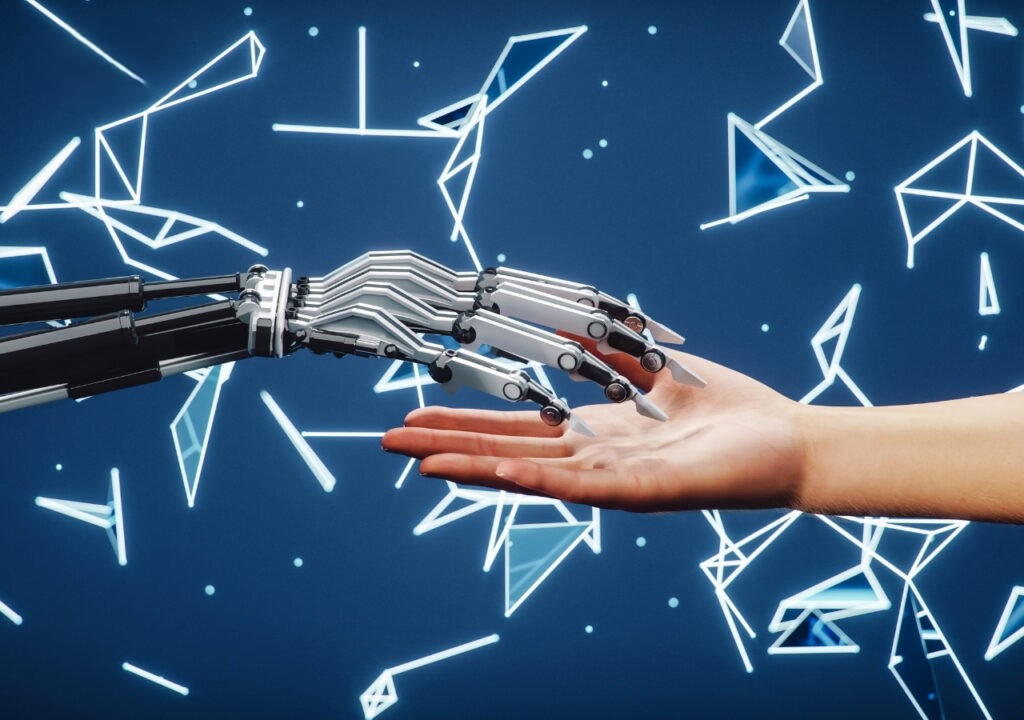
The modern workplace is experiencing a major transformation driven by advancements in Artificial Intelligence (AI). What was once limited to automating repetitive tasks has now evolved into intelligent systems actively participating in everyday work. From virtual assistants to predictive analytics tools, AI is no longer operating in the background—it is becoming a collaborative partner. This shift is not about replacing human workers but about redefining how humans and machines work together. The concept of Human + AI collaboration is reshaping job roles, skill requirements, and organizational strategies, placing HR at the center of this evolution.
From Automation to Augmentation –
Earlier, organizations focused on automation to reduce manual effort and improve efficiency. However, the current wave of AI is centered on augmentation rather than replacement. AI systems can process vast amounts of data, identify patterns, and generate insights within seconds, while humans contribute contextual understanding, creativity, and ethical judgment. This combination creates a more powerful and efficient workflow. As a result, employees are transitioning into augmented roles where they rely on AI tools to enhance their productivity and decision-making capabilities rather than performing tasks independently.
AI as an Assistant –
In many organizations, AI functions as a supportive assistant that handles routine and time-consuming tasks. In HR, this includes resume screening, answering employee queries through chatbots, and managing interview scheduling. By offloading administrative work to AI, HR professionals can focus more on strategic initiatives such as talent development and employee engagement. This model improves efficiency without significantly altering the core responsibilities of employees, making it one of the easiest collaboration models to implement.
AI as a Co-Worker –
As AI systems become more advanced, they are increasingly acting as co-workers rather than just tools. In this model, AI contributes insights, recommendations, and analysis that influence decision-making. For example, AI can suggest the best candidates based on data patterns or provide performance insights to managers. Employees are then required to interpret these insights and make informed decisions. This creates a collaborative environment where humans and AI work together, combining analytical power with human judgment.
AI as a Decision Engine –
In more advanced use cases, AI takes on the role of a decision engine by making data-driven decisions with minimal human intervention. This can include workforce scheduling, predictive attrition analysis, and automated HR workflows. While AI handles the decision-making process, humans are responsible for oversight, governance, and ensuring ethical standards are maintained. This model shifts job roles from direct decision-making to monitoring and validating AI-driven outcomes, requiring a higher level of trust and accountability.
AI as a Learning Partner –
AI is also transforming how employees learn and grow within organizations. As a learning partner, AI provides personalized training recommendations, identifies skill gaps, and suggests career development paths. This enables continuous learning and helps employees stay relevant in a rapidly changing work environment. Instead of relying on traditional training programs, organizations can now offer dynamic and adaptive learning experiences tailored to individual needs.
Redefining Job Roles in the AI Era –
The integration of AI is fundamentally changing job structures. Roles are shifting from task-based responsibilities to outcome-driven performance, where employees are evaluated based on results achieved with AI support. Additionally, hybrid roles are emerging at the intersection of business and technology, such as HR data analysts and AI trainers. These roles require both domain expertise and technical understanding. At the same time, AI is enabling the rise of “superworkers”—employees who leverage technology to achieve significantly higher productivity and efficiency.
Skills Required for Human + AI Collaboration –
To thrive in this new environment, employees must develop a combination of technical and human-centric skills. Digital literacy is essential to understand and effectively use AI tools. Critical thinking is required to evaluate AI-generated insights rather than accepting them blindly. Data interpretation skills help employees make informed decisions based on analytics. At the same time, human skills such as emotional intelligence, communication, and adaptability are becoming more valuable, as they complement AI capabilities and cannot be easily replicated by machines.
Challenges in Implementation –
Despite its advantages, implementing Human + AI collaboration comes with challenges. One of the primary concerns is building trust in AI systems, as employees may be hesitant to rely on automated decisions. Job security fears can also hinder adoption, especially if employees perceive AI as a threat. Additionally, ethical concerns such as bias in AI algorithms must be addressed to ensure fair and transparent decision-making. Organizations must also invest in change management strategies to help employees adapt to new ways of working.
The Role of HR in This Transformation –
HR plays a critical role in enabling successful Human + AI collaboration. This includes redesigning job roles to incorporate AI capabilities, developing upskilling and reskilling programs, and establishing ethical guidelines for AI usage. HR leaders must also drive cultural change by promoting a mindset of collaboration rather than competition between humans and machines. By focusing on employee experience and continuous learning, HR can ensure a smooth transition into AI-integrated workplaces.
Future of the Augmented Workforce –
The future of work will be defined by how effectively humans and AI collaborate. Organizations will move toward more flexible roles, continuous learning environments, and AI-assisted decision-making processes. Employees will not be replaced but empowered, working alongside intelligent systems to achieve better outcomes. Companies that embrace this transformation early will gain a competitive advantage in terms of productivity, innovation, and talent retention.
Conclusion –
Human + AI collaboration is no longer a concept of the future—it is already shaping the present. The integration of AI into the workplace is redefining job roles, skill requirements, and organizational strategies. For HR professionals, this is an opportunity to lead a meaningful transformation by building a workforce that is both technologically empowered and human-centric. The future belongs to organizations that understand one simple truth: success lies not in choosing between humans and AI, but in combining the strengths of both.