


Recruitment CRM vs ATS is one of the most common comparisons organizations make when investing in modern recruitment technology. As businesses compete to attract and hire top talent, choosing the right platform has become essential for improving hiring efficiency and enhancing the candidate experience. While both Applicant Tracking Systems (ATS) and Recruitment Customer Relationship Management (CRM) solutions support recruitment, they serve different purposes within the hiring process.
An ATS helps recruiters manage active job applications and streamline hiring workflows, whereas a Recruitment CRM focuses on building relationships with potential candidates before they apply. Understanding the strengths of each platform can help organizations make informed technology investments that align with their hiring strategy and long-term talent acquisition goals.
What Is an Applicant Tracking System (ATS)?
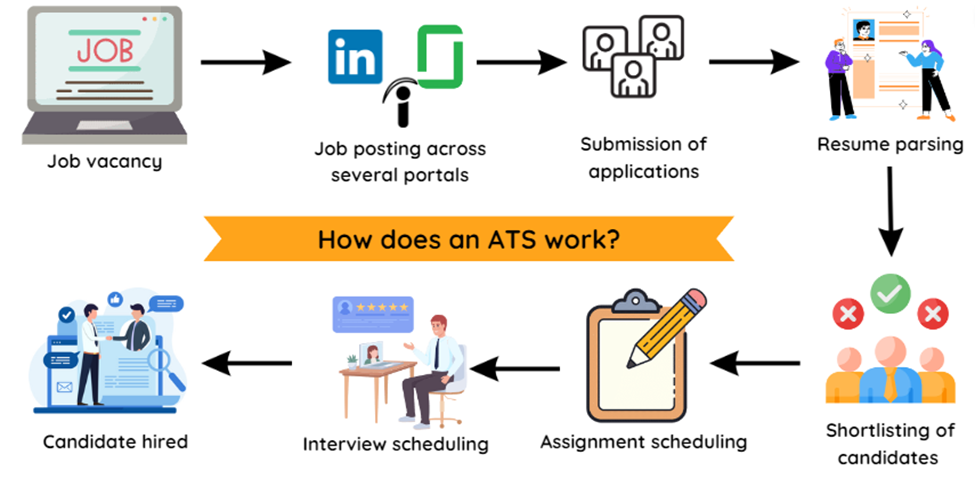
An Applicant Tracking System (ATS) is recruitment software designed to manage candidates after they submit a job application. It centralizes the hiring process by allowing recruiters to collect resumes, screen applicants, schedule interviews, collaborate with hiring managers, and track candidates through every recruitment stage.
Organizations that receive large numbers of applications rely on ATS platforms to reduce manual work, improve hiring consistency, and accelerate recruitment. Automated resume parsing, interview scheduling, workflow management, and reporting capabilities help recruiters focus more on evaluating candidates rather than performing administrative tasks.
For businesses with frequent hiring needs, an ATS serves as the operational backbone of recruitment.
What Is a Recruitment CRM?
A Recruitment CRM is designed to help organizations build and nurture relationships with potential candidates before positions become available. Rather than managing applicants, it focuses on engaging passive talent, maintaining talent pools, and strengthening employer branding.
Recruiters can use Recruitment CRM software to send personalized email campaigns, segment candidates by skills or experience, automate follow-ups, and create long-term talent communities. This proactive approach allows organizations to develop a qualified pipeline of candidates, reducing the time required to fill future vacancies.
Instead of waiting for talent to apply, businesses using Recruitment CRM platforms actively engage candidates throughout their career journey.
Recruitment CRM vs ATS: Key Differences –
Although both systems support recruitment, they are designed for different stages of the hiring process.
| Feature | Recruitment CRM | Applicant Tracking System (ATS) |
|---|---|---|
| Primary Purpose | Build and nurture candidate relationships | Manage job applications and hiring workflow |
| Candidate Focus | Passive and future candidates | Active applicants |
| Recruitment Stage | Before application | After application |
| Talent Pool Management | Excellent | Limited |
| Candidate Engagement | Personalized campaigns | Hiring updates |
| Resume Management | Basic | Advanced |
| Interview Scheduling | Limited | Comprehensive |
| Recruitment Marketing | Strong | Minimal |
| Long-Term Relationship Building | Yes | No |
| Best For | Talent acquisition and employer branding | Recruitment process management |
Benefits of Using a Recruitment CRM –
Organizations facing talent shortages often benefit significantly from implementing a Recruitment CRM. Instead of starting every hiring process from scratch, recruiters maintain relationships with qualified professionals who may be interested in future opportunities.
Some key advantages include:
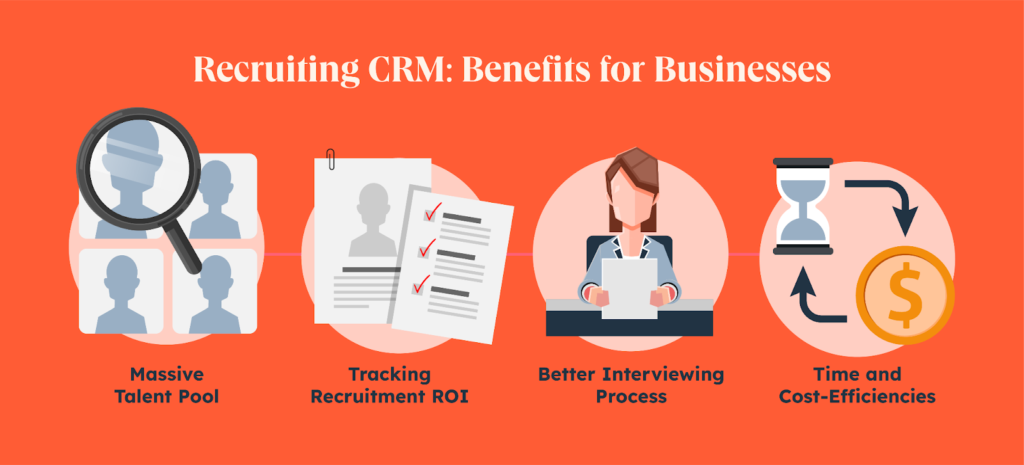
- Stronger talent pipelines
- Better candidate engagement
- Improved employer branding
- Personalized communication at scale
- Reduced sourcing time
- Faster hiring for future roles
These capabilities help organizations build long-term recruitment strategies rather than relying solely on reactive hiring.
Benefits of Using an ATS –
An Applicant Tracking System excels at simplifying and organizing active recruitment processes. It ensures that every applicant progresses through standardized workflows while providing recruiters with complete visibility into hiring activities.
Major advantages include:
- Automated resume screening
- Faster candidate shortlisting
- Improved hiring collaboration
- Centralized candidate database
- Interview scheduling automation
- Recruitment compliance tracking
For companies managing high application volumes, an ATS significantly improves recruitment efficiency while reducing manual administrative work.
When Should You Choose a Recruitment CRM?
A Recruitment CRM is the ideal solution when your organization focuses on proactive hiring and long-term talent acquisition. Businesses operating in competitive industries often struggle to attract highly skilled professionals through job advertisements alone.
If your recruitment strategy includes employer branding, talent community development, candidate nurturing, and personalized outreach, a Recruitment CRM provides the necessary tools to support those initiatives.
Companies with continuous hiring requirements often gain substantial value by maintaining active relationships with potential candidates long before positions become available.
When Is an ATS the Better Choice?
An ATS is best suited for organizations that receive a high volume of job applications and require structured recruitment workflows. Companies looking to improve hiring efficiency, reduce administrative tasks, and maintain organized candidate records typically benefit from implementing an Applicant Tracking System.
Businesses focused on operational excellence during the recruitment process often consider an ATS an essential component of their HR technology stack.
Can Recruitment CRM and ATS Work Together?
Many organizations mistakenly believe they must choose between a Recruitment CRM and an ATS. In reality, the two technologies complement one another.
A Recruitment CRM helps attract, engage, and nurture talent before candidates apply, while an ATS manages those candidates after they enter the hiring process.
Together, they create a seamless recruitment ecosystem where recruiters can build relationships, maintain talent pipelines, and efficiently manage hiring workflows from initial engagement to final onboarding.
For organizations with long-term recruitment goals, integrating both systems often delivers the greatest return on investment.
Emerging Trends in Recruitment Technology –
Artificial intelligence is transforming both Recruitment CRM and ATS platforms. Modern recruitment solutions now offer intelligent candidate matching, predictive hiring analytics, automated interview scheduling, AI-powered resume screening, and personalized communication recommendations.
Cloud-based recruitment platforms also provide greater scalability, integration with HR systems, and advanced reporting capabilities that help organizations make data-driven hiring decisions.
As recruitment technology continues evolving, many software providers are combining CRM and ATS functionality into unified talent acquisition platforms that support the entire candidate lifecycle.
Conclusion –
The decision between a Recruitment CRM vs ATS depends entirely on your organization’s hiring strategy, recruitment challenges, and long-term talent acquisition objectives.
An Applicant Tracking System is ideal for managing active recruitment processes, improving hiring efficiency, and organizing candidate workflows. A Recruitment CRM focuses on building meaningful relationships with future candidates, strengthening employer branding, and developing sustainable talent pipelines.
For many organizations, the most effective solution is not choosing one over the other but combining both technologies to create a comprehensive recruitment strategy. By integrating proactive candidate engagement with efficient hiring management, businesses can improve recruitment outcomes, reduce time-to-hire, and secure the skilled talent needed for long-term growth.