


Table of Contents –
2). The Evolution of Enterprise Technology
3). Why Every Business Depends on Software Today
4). Software Is Becoming the Business Model
5). The Rise of SaaS and Cloud Computing
6). Artificial Intelligence Is Accelerating the Transformation
7). Low-Code and No-Code Platforms Are Changing Innovation
8). Data Is the New Competitive Advantage
9). Challenges of Becoming a Software-Driven Enterprise
10). Building a Software-First Enterprise Strategy
For decades, software companies occupied a distinct place in the business world. Organizations like Microsoft, Oracle, SAP, and Adobe built products that millions of businesses depended on, while manufacturers, retailers, banks, healthcare providers, logistics companies, and construction firms focused on their respective industries. Today, however, those boundaries have largely disappeared. Modern enterprises are increasingly defined not just by the products they manufacture or the services they deliver, but by the software that powers every aspect of their operations.
Interestingly, this transformation is happening even in organizations that never develop software products themselves. Instead of hiring large engineering teams to build applications from scratch, businesses are assembling powerful digital ecosystems using cloud platforms, Software-as-a-Service (SaaS) applications, automation tools, low-code platforms, artificial intelligence, APIs, and data analytics solutions. Whether a company produces automobiles, manages hospitals, operates hotels, or distributes consumer goods, software has become the invisible engine driving competitiveness, efficiency, and innovation.
The statement that “every enterprise is becoming a software company” no longer refers solely to businesses writing millions of lines of code. It reflects a broader reality: every organization now relies on software to make decisions, optimize operations, enhance customer experiences, and create value in an increasingly digital economy.
The Evolution of Enterprise Technology –

Enterprise technology has undergone a remarkable transformation over the past three decades. Early business systems primarily supported administrative functions such as accounting, payroll, inventory management, and customer databases. These applications operated independently, often requiring manual data transfers between departments.
Enterprise technology has undergone a remarkable transformation over the past three decades. Early business systems primarily supported administrative functions such as accounting, payroll, inventory management, and customer databases. These applications operated independently, often requiring manual data transfers between departments.
Today, enterprise software forms the backbone of organizational operations. Cloud computing enables businesses to access sophisticated applications without maintaining expensive on-premises infrastructure. Artificial intelligence analyzes vast datasets to uncover business insights, while automation eliminates repetitive manual tasks. Integrated platforms connect finance, sales, marketing, human resources, customer support, procurement, and operations into a unified digital ecosystem.
Rather than functioning as isolated business tools, software platforms have become strategic assets that influence competitive advantage, customer satisfaction, operational efficiency, and long-term growth.
Traditional Enterprises vs. Modern Digital Enterprises –
| Business Aspect | Traditional Enterprise | Modern Digital Enterprise |
|---|---|---|
| Core Operations | Manual and paper-based | Digitally automated |
| Customer Engagement | Physical interactions | Omnichannel digital experiences |
| Decision Making | Historical reports | Real-time analytics |
| Infrastructure | On-premises systems | Cloud-first platforms |
| Innovation | Periodic improvements | Continuous digital innovation |
| Data Usage | Departmental silos | Integrated enterprise data |
| Competitive Advantage | Physical assets | Technology and data capabilities |
Why Every Business Depends on Software Today –
Software is no longer confined to IT departments. It has become central to virtually every business function. Retailers rely on inventory management platforms and e-commerce systems to meet customer expectations. Manufacturers use predictive maintenance software to reduce equipment downtime. Financial institutions employ AI-powered fraud detection systems to secure transactions. Healthcare organizations utilize electronic health records, telemedicine platforms, and clinical analytics to improve patient care.
Even organizations that outsource software development or rely entirely on third-party solutions are effectively operating as software-driven enterprises. Their ability to compete increasingly depends on how well they integrate, configure, and leverage digital technologies rather than on whether they build software internally.
This shift highlights an important distinction: being a software company today is less about writing code and more about using software strategically to achieve business objectives.
Software Is Becoming the Business Model –
Digital technologies are no longer supporting business models—they are becoming business models themselves. Companies across industries now generate revenue through subscription services, digital platforms, connected products, online marketplaces, and data-driven services.
Manufacturers increasingly offer predictive maintenance subscriptions alongside physical equipment. Automotive companies deliver over-the-air software updates that improve vehicle performance long after purchase. Retailers use mobile applications to personalize customer experiences and encourage repeat purchases. Banks compete through digital banking platforms rather than branch networks alone.
As software becomes deeply integrated into products and services, customer expectations evolve. Speed, personalization, convenience, and seamless digital experiences now influence purchasing decisions as much as product quality or pricing.
“In today’s economy, software is no longer a department within the business—it is the business infrastructure that connects people, processes, and innovation.”
The Rise of SaaS and Cloud Computing –
Cloud computing has dramatically lowered the barriers to digital transformation. Instead of investing millions in custom-built software and dedicated infrastructure, organizations can subscribe to cloud-based applications that deliver enterprise-grade capabilities on demand.
Software-as-a-Service (SaaS) solutions provide businesses with scalable access to customer relationship management, enterprise resource planning, collaboration platforms, cybersecurity tools, marketing automation, financial management, and human resource systems. Updates, maintenance, security patches, and infrastructure management are handled by service providers, allowing organizations to focus on business outcomes rather than technology maintenance.
This accessibility has enabled businesses of all sizes to adopt technologies that were once available only to large enterprises.
How Software Supports Different Business Functions –
| Department | Software Applications | Business Benefits |
|---|---|---|
| Sales | CRM platforms | Better customer relationships |
| Marketing | Automation tools | Personalized campaigns |
| Finance | ERP and accounting software | Financial accuracy |
| Human Resources | HR management systems | Workforce efficiency |
| Operations | Workflow automation | Increased productivity |
| Customer Support | Helpdesk platforms | Faster issue resolution |
| Supply Chain | Logistics software | Improved visibility |
Artificial Intelligence Is Accelerating the Transformation –
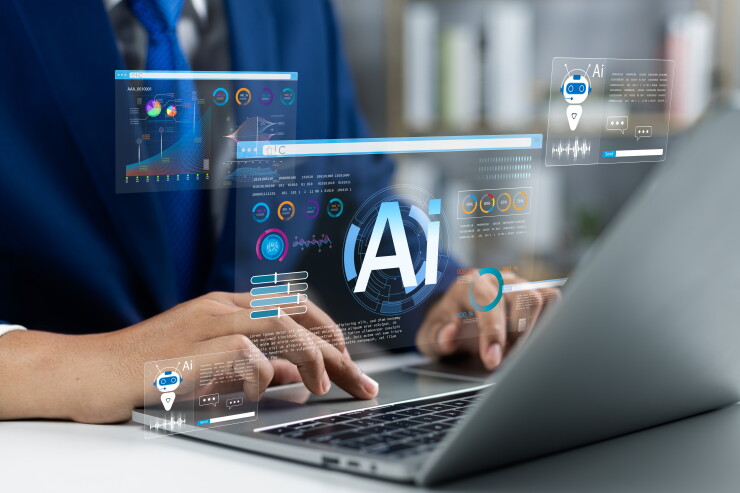
Artificial intelligence represents the next stage in enterprise software evolution. Rather than simply automating repetitive tasks, AI enables businesses to predict customer behavior, optimize supply chains, generate content, detect fraud, recommend products, and support decision-making through advanced analytics.
Organizations no longer need dedicated AI research teams to benefit from these capabilities. Most enterprise software vendors now embed AI directly into their platforms, allowing businesses to leverage intelligent features through existing applications.
This democratization of AI means that enterprises are becoming increasingly software-driven without significantly expanding internal software development capabilities.
Low-Code and No-Code Platforms Are Changing Innovation –
Historically, implementing new business applications required extensive software development projects. Today, low-code and no-code platforms enable business users to create workflows, dashboards, approval systems, mobile applications, and process automations with minimal programming knowledge.
This shift empowers departments outside IT to solve operational challenges independently while reducing development bottlenecks. Marketing teams can automate campaigns, HR departments can digitize employee onboarding, and finance teams can streamline approval processes without waiting months for software development resources.
As a result, innovation becomes distributed across the organization rather than concentrated within engineering teams.
Data Is the New Competitive Advantage –
Modern enterprises generate enormous volumes of operational, financial, customer, and market data every day. However, raw data alone offers limited value. Software platforms transform this information into actionable insights through analytics, dashboards, predictive modeling, and business intelligence.
Organizations that effectively utilize data-driven software gain significant advantages in forecasting demand, optimizing pricing, identifying customer trends, reducing operational costs, and improving strategic planning.
Consequently, software is becoming the primary mechanism through which enterprises convert information into measurable business value.
“Organizations no longer compete solely through products or services—they compete through the intelligence embedded in their software ecosystems.”
Challenges of Becoming a Software-Driven Enterprise –
While digital transformation offers significant opportunities, it also introduces new challenges. As organizations adopt more software platforms, they must address issues related to cybersecurity, data privacy, integration complexity, employee training, regulatory compliance, and vendor management.
Fragmented technology ecosystems can create operational inefficiencies if applications fail to communicate effectively. Similarly, employees may resist adopting new digital workflows without adequate training and organizational support.
Successful digital enterprises recognize that technology implementation is only one component of transformation. Equally important are governance, change management, leadership commitment, and continuous improvement.
Building a Software-First Enterprise Strategy –
Organizations seeking long-term competitiveness should approach software strategically rather than tactically. Instead of viewing software as an operational expense, business leaders should consider it a core investment in innovation, agility, and customer value.
A successful software-first strategy begins by aligning technology investments with business objectives. Cloud adoption, AI integration, automation initiatives, cybersecurity enhancements, and employee digital skills should all contribute to measurable organizational outcomes.
Rather than pursuing technology for its own sake, enterprises should focus on creating interconnected digital ecosystems that enable faster decision-making, operational resilience, and exceptional customer experiences.
Best Practices for Modern Enterprises –
- Develop a clear digital transformation roadmap aligned with business goals.
- Prioritize cloud-native and scalable software solutions.
- Invest in cybersecurity alongside software adoption.
- Integrate enterprise applications using APIs and automation.
- Encourage cross-functional collaboration between business and IT teams.
- Leverage AI capabilities embedded within enterprise platforms.
- Promote digital literacy across the workforce.
- Continuously evaluate software performance and business outcomes.
- Eliminate redundant systems to reduce complexity.
- Foster a culture of continuous innovation and adaptability.
Conclusion –
The idea that every enterprise is becoming a software company extends far beyond software development. Today’s organizations compete through digital capabilities, intelligent automation, cloud platforms, data analytics, and AI-powered decision-making. Whether they manufacture products, provide healthcare, manage logistics, or deliver financial services, businesses increasingly depend on software to operate efficiently, engage customers, and innovate at scale.
Success in the digital economy is no longer determined by the ability to write software code alone. It depends on an organization’s ability to strategically adopt, integrate, and optimize software technologies that enhance every aspect of the business. Enterprises that embrace this mindset will be better positioned to respond to changing market demands, improve operational resilience, and deliver greater value to customers.
Ultimately, the future belongs not only to software companies but to every enterprise that recognizes software as a strategic foundation for growth, competitiveness, and long-term success.
Frequently Asked Questions (FAQs) –
Businesses rely on software for operations, customer engagement, automation, analytics, and innovation, even if they do not develop software themselves.
No. Many organizations use SaaS, cloud platforms, low-code tools, and AI-powered applications to achieve digital transformation without building software from scratch.
Software enhances efficiency, automates workflows, supports data-driven decisions, improves customer experiences, and enables scalable business operations.
AI helps automate tasks, analyze data, predict trends, personalize customer interactions, optimize operations, and improve decision-making.
Common challenges include cybersecurity risks, system integration, employee adoption, data governance, and managing an increasingly complex technology ecosystem.