


Introduction –
In today’s fast-evolving IT landscape, choosing the right software architecture plays a crucial role in application performance, scalability, and long-term maintenance. Organizations often struggle to decide between monolithic architecture, microservices, and the increasingly popular modular monolith approach. Each architecture has its own strengths, weaknesses, and ideal use cases. Understanding these differences helps IT teams align technical decisions with business goals and future growth plans.
Monolithic Architecture –
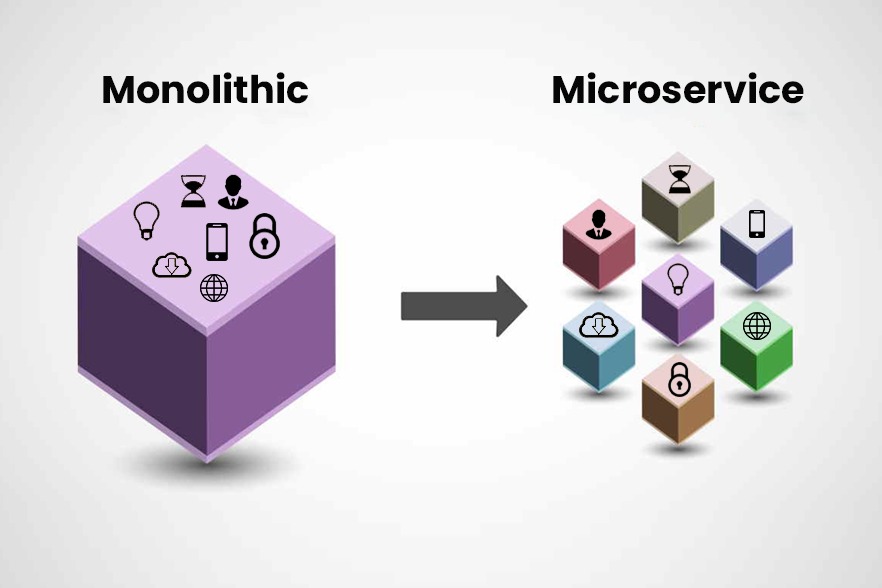
Monolithic architecture is the traditional approach to application development where all components—such as user interface, business logic, and database access—are built into a single, unified codebase. The entire application is deployed as one unit, which makes development straightforward, especially during the early stages of a project. This architecture is easy to test, debug, and deploy because everything resides in one place. However, as the application grows, monoliths can become difficult to maintain and scale. Even a small change requires redeploying the entire application, increasing the risk of failures and slowing down innovation.
Microservices Architecture –
Microservices architecture breaks an application into smaller, independent services, each responsible for a specific business capability. These services communicate with each other using APIs and can be developed, deployed, and scaled independently. This approach provides high flexibility and allows teams to adopt different technologies for different services. Microservices improve fault isolation, meaning failures in one service do not bring down the entire system. However, this architecture introduces operational complexity. Managing multiple services requires advanced DevOps practices, monitoring tools, and infrastructure automation, which can increase costs and require skilled teams.
Modular Monolith Architecture –
A modular monolith is a modern evolution of the traditional monolith that emphasizes internal structure and separation of concerns. While the application is still deployed as a single unit, it is divided into well-defined modules with clear boundaries. Each module represents a distinct business function and interacts with other modules through controlled interfaces. This design improves maintainability and code clarity while avoiding the operational overhead of microservices. Modular monoliths are particularly useful for growing applications that need better organization today and scalability options in the future.
Key Differences Between the Architectures –
The primary difference between these architectures lies in deployment, scalability, and complexity. Monoliths are simple to deploy but difficult to scale selectively. Microservices enable fine-grained scaling and independent deployments but require sophisticated infrastructure and operational maturity. Modular monoliths sit between the two, offering structured code and easier management without introducing distributed system complexity too early. Choosing between them depends on team size, project maturity, and business requirements.
Choosing the Right Architecture –
Selecting the right architecture should be driven by practical needs rather than trends. Monolithic architecture is well suited for startups, MVPs, and small teams that prioritize speed and simplicity. Modular monoliths work best for applications that are growing in size and complexity and require better structure without heavy operational costs. Microservices are ideal for large enterprises with multiple teams, high traffic, and strong DevOps capabilities that demand independent scaling and frequent releases.
Industry Trend: Start Modular, Then Evolve –
Many organizations today adopt a “start modular, evolve gradually” approach. By beginning with a modular monolith, teams maintain simplicity while enforcing clean architectural boundaries. As the system grows, specific modules can be extracted into microservices when justified by scale or business demand. This strategy reduces risk, avoids premature complexity, and supports long-term scalability.
Conclusion –
There is no universal best architecture for every application. Monolithic architectures offer simplicity, microservices deliver scalability and agility, and modular monoliths provide a balanced and future-ready solution. The right choice depends on your organization’s size, technical maturity, and long-term vision. Making an informed decision early can save significant time, cost, and effort as your application evolves.