


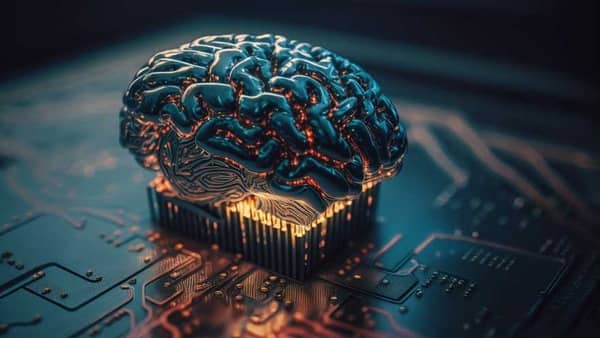
As artificial intelligence continues to evolve, traditional computing architectures are beginning to show their limitations—particularly in areas such as energy efficiency, real-time learning, and contextual decision-making. Neuromorphic computing offers a promising alternative by drawing inspiration from the human brain. By emulating how neurons and synapses process information, neuromorphic systems aim to create machines that are faster, smarter, and significantly more efficient.
What Is Neuromorphic Computing?
Neuromorphic computing is an approach to computer architecture that models hardware and software after the structure and functioning of the human brain. Unlike conventional computers that rely on sequential processing, neuromorphic systems use networks of artificial neurons and synapses to process information in parallel. These systems operate in an event-driven manner, meaning computation happens only when data changes—much like neural activity in the brain.
How Neuromorphic Systems Work –
At the core of neuromorphic computing are spiking neural networks (SNNs). These networks transmit information through discrete electrical pulses, or “spikes,” instead of continuous signals. Synaptic connections dynamically adjust their strength based on learning rules, enabling systems to adapt over time. Specialized neuromorphic chips integrate memory and processing units closely together, reducing latency and power consumption compared to traditional CPU- and GPU-based systems.
Key Advantages of Neuromorphic Computing –
One of the biggest advantages of neuromorphic computing is energy efficiency. The human brain operates on roughly 20 watts of power, and neuromorphic systems aim to achieve similar efficiency levels. These architectures also excel at real-time learning and pattern recognition, making them ideal for applications where rapid decision-making is essential. Additionally, their inherent parallelism allows them to process complex data streams—such as sensory input—more naturally and effectively.
Real-World Applications –
Neuromorphic computing has the potential to transform multiple industries. In robotics, it enables machines to respond intelligently to unpredictable environments. In healthcare, neuromorphic systems can support advanced brain-computer interfaces and more accurate neurological diagnostics. Autonomous vehicles benefit from faster perception and decision-making, while edge computing applications leverage neuromorphic chips to process data locally with minimal power consumption.
Challenges and Limitations –
Despite its promise, neuromorphic computing is still in its early stages. Developing software tools and programming models for neuromorphic hardware remains a challenge, as traditional algorithms do not always translate well. Standardization is another hurdle, with different vendors adopting varied architectures. Additionally, widespread adoption depends on proving scalability and long-term reliability in real-world deployments.
The Future of Brain-Inspired Computing –
As research progresses, neuromorphic computing is expected to play a key role in the next generation of AI systems. Continued advancements in materials science, chip design, and machine learning algorithms will help bridge the gap between biological intelligence and artificial systems. Rather than replacing traditional computing, neuromorphic architectures are likely to complement existing technologies—particularly in areas requiring adaptive, low-power intelligence.
Conclusion –
Neuromorphic computing represents a significant shift in how we design intelligent systems. By mimicking the structure and behavior of the human brain, it offers a path toward more efficient, adaptive, and responsive machines. As challenges around development and adoption are addressed, neuromorphic computing could become a cornerstone of future AI innovation—bringing us closer to truly intelligent, brain-inspired technology.