


For decades, trust has been one of the strongest competitive advantages a business could possess. Customers trusted familiar brands, investors believed executive statements, employees relied on leadership communication, and partners built long-term relationships based on authenticity. Whenever a CEO appeared on television, addressed shareholders, or announced major business decisions, few questioned whether the message genuinely came from the company’s leadership.
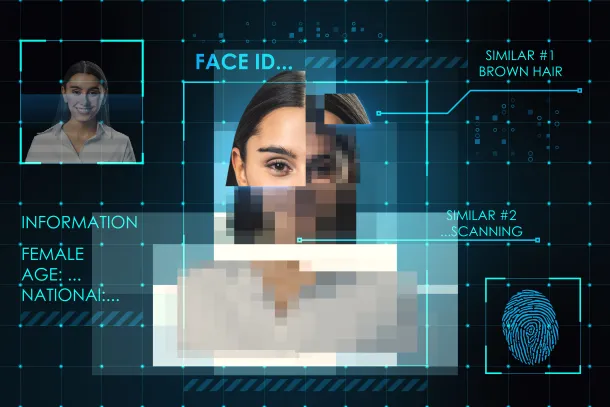
Artificial Intelligence has fundamentally changed this assumption. Today, only a few minutes of publicly available audio or video can enable AI systems to create remarkably convincing voice and video impersonations. Deepfake technology has evolved beyond internet entertainment and entered the enterprise landscape, creating serious concerns for cybersecurity, corporate governance, financial stability, and organizational trust.
Understanding the Rise of Corporate Deepfakes –
Generative AI has dramatically lowered the technical barriers required to create realistic synthetic media. Modern AI models can accurately reproduce a person’s voice, facial expressions, speech patterns, emotional tone, and even body language.
While these technologies provide legitimate business benefits such as:
- Personalized customer engagement
- Multilingual communication
- Digital assistants
- Employee training
- Accessibility improvements
they also introduce unprecedented opportunities for cybercriminals, fraudsters, and malicious actors.
The same AI capable of improving productivity can also manufacture highly believable misinformation.
Why Executives Are Prime Targets –
Corporate executives have become attractive targets because their public identities carry significant authority. A fabricated video or cloned voice can announce fake mergers, financial results, executive resignations, cybersecurity incidents, or controversial public statements.
Such incidents can trigger:
| Potential Fake Announcement | Business Impact |
|---|---|
| CEO resigns unexpectedly | Stock price volatility |
| Fake acquisition news | Investor panic |
| Data breach announcement | Customer distrust |
| Product recall | Revenue loss |
| Public controversy | Brand reputation damage |
Since financial markets react almost instantly to executive communication, even a short-lived deepfake can create lasting financial consequences.
Deepfakes Are Becoming a Powerful Cybercrime Tool –

The threat extends far beyond social media.
Cybercriminals increasingly use AI-generated voices during phone calls to impersonate executives and convince employees to:
- Approve wire transfers
- Share confidential information
- Reset security credentials
- Bypass approval workflows
- Reveal sensitive customer data
Unlike traditional phishing emails, voice cloning leverages human psychology. Employees naturally trust familiar voices, especially when requests appear urgent or originate from senior leadership.
As AI models continue improving, distinguishing real conversations from synthetic ones will become increasingly difficult.
Supply Chain Risks Continue to Grow –
Modern organizations depend on extensive ecosystems involving suppliers, logistics companies, financial institutions, legal advisors, technology vendors, and global partners.
Imagine receiving:
- A video call from what appears to be your supplier’s CEO requesting immediate contract changes.
- A voice message from your CFO asking for an urgent international payment.
- A fake procurement approval during an operational emergency.
Each scenario could result in significant operational disruption and financial loss if verification procedures are absent.
Brand Reputation Faces a New Challenge –
Corporate reputation has traditionally relied on carefully managed communication strategies. However, deepfakes allow fabricated interviews, counterfeit product launches, and manipulated keynote speeches to spread across social media within minutes.
Even when organizations quickly issue clarifications, misinformation often travels faster than official responses.
Some long-term consequences include:
- Loss of customer confidence
- Negative media coverage
- Investor uncertainty
- Regulatory investigations
- Declining brand credibility
Human Resources Must Prepare for Synthetic Communication –
Remote and hybrid work environments have increased employee reliance on digital communication. This creates new opportunities for AI-generated executive impersonation.
HR departments now need to expand traditional cybersecurity awareness programs by educating employees about:
- Media verification
- AI-generated content
- Executive impersonation
- Secure communication channels
- Identity authentication
Building AI literacy across the workforce is becoming as important as phishing awareness training.
Legal and Regulatory Challenges –
Current laws covering fraud, identity theft, intellectual property, and privacy only partially address AI-generated impersonation.
Important legal questions remain unresolved:
- Who owns an executive’s voiceprint?
- Can AI-generated likenesses be copyrighted?
- Who is liable for AI impersonation?
- How should synthetic content be disclosed?
Organizations should establish internal governance policies rather than waiting for global regulations to mature.
Technologies That Can Help Protect Organizations –
Although no single solution completely eliminates the threat, several technologies significantly improve organizational resilience.
| Technology | Purpose |
|---|---|
| Digital Watermarking | Confirms AI-generated content authenticity |
| Cryptographic Signatures | Verifies official corporate communications |
| AI Detection Systems | Identifies manipulated media |
| Multi-Factor Verification | Prevents fraudulent approvals |
| Blockchain Verification | Protects content integrity |
The strongest defense combines multiple verification technologies with well-defined corporate policies.
Building a Trust-Based Communication Framework –
Organizations must rethink how trust is established in the AI era.
Previously, familiarity was enough. Recognizing a CEO’s voice or face typically confirmed authenticity.
Today, trust increasingly depends upon:
- Verified communication channels
- Digitally signed executive announcements
- Approved media distribution platforms
- Independent verification procedures
- Employee awareness training
Trust is shifting from perception toward verification.
Balancing Executive Visibility and Digital Security –
Executives are encouraged to publish podcasts, keynote speeches, interviews, webinars, and social media content to strengthen brand presence.
Ironically, every public recording also provides additional training data for AI voice cloning systems.
Rather than limiting executive visibility, organizations should invest in stronger authentication methods that preserve transparency while protecting digital identities.
The Future of AI-Powered Executive Communication –
Businesses are beginning to adopt AI assistants capable of representing executives during meetings, customer support interactions, and internal communications.
These legitimate AI representatives will inevitably coexist alongside malicious impersonations.
To maintain trust, organizations must clearly distinguish authorized AI-generated communications from fraudulent synthetic content through transparency, disclosure, and authentication.
Conclusion –
Deepfake technology represents far more than another cybersecurity concern. It challenges one of the fundamental assumptions underlying modern business—that seeing and hearing someone is sufficient proof of authenticity.
As artificial intelligence continues to blur the line between real and synthetic media, enterprises must shift their focus from recognition to verification.
Organizations that proactively invest in identity verification, employee education, secure communication protocols, and AI governance will not only reduce fraud risks but also strengthen one of the most valuable assets any business can possess: trust.
Ultimately, artificial intelligence may create extraordinary capabilities, but long-term business success will always depend on credibility, transparency, and verified authenticity.
Frequently Asked Questions (FAQs) –
A corporate deepfake is AI-generated audio, video, or images that impersonate executives or organizations to deceive employees, customers, investors, or business partners.
CEOs possess authority and public visibility, making their voices and appearances valuable for cybercriminals seeking financial fraud, misinformation, or reputational damage.
Businesses should implement digital signatures, multi-factor verification, AI detection tools, employee awareness training, secure communication policies, and executive identity protection strategies.
Yes. Fake executive announcements regarding mergers, financial performance, or security incidents can influence investor sentiment and create temporary or significant market volatility.