


For years, B2B organizations have relied on Marketing Qualified Leads (MQLs) as a key metric for measuring demand generation success. The traditional model was straightforward: attract website visitors, encourage them to download content or register for webinars, assign lead scores based on engagement, and pass the highest-scoring prospects to the sales team. Website visits, email clicks, whitepaper downloads, and demo requests became reliable indicators of buying interest, forming the backbone of marketing and sales alignment.
However, today’s buying landscape looks very different. Modern B2B buyers conduct extensive research long before they ever speak with a sales representative. They compare vendors, read analyst reports, seek peer recommendations, explore online communities, use AI-powered search tools, and evaluate multiple solutions independently. By the time they submit a contact form or request a product demonstration, much of their purchasing decision has already been made. This shift is prompting organizations to rethink whether traditional MQLs are still the best way to identify revenue opportunities.
“The future of B2B marketing isn’t about generating more MQLs—it’s about recognizing buying intent before your competitors do.”
Why Traditional MQLs Are Losing Their Effectiveness –
The conventional MQL model was designed when buyers followed relatively predictable purchasing journeys. Prospects typically discovered a company through marketing campaigns, consumed gated content, and gradually moved through a structured sales funnel.
Today’s buyers rarely follow that path. Instead, they gather information from multiple digital channels simultaneously, making their journey far less linear. A prospect may spend weeks researching products through industry publications, social media discussions, AI-powered answer engines, comparison websites, and customer review platforms without ever interacting directly with a company’s website.
As a result, organizations relying solely on MQLs often identify buyer interest too late. Traditional lead scoring captures only visible interactions within owned marketing channels while overlooking countless external signals that indicate genuine purchase intent.
From Lead Scoring to Buying Signals –
As buyer behavior evolves, organizations are increasingly shifting their focus from lead scoring to buying signals.
Unlike Marketing Qualified Leads, buying signals provide a broader view of customer intent. Rather than depending solely on individual actions such as downloading an eBook or attending a webinar, buying signals analyze a combination of behavioral, firmographic, and intent-based data to determine whether an organization is actively evaluating solutions.
These signals may include:
- Intent data from third-party platforms
- Repeated research on specific product categories
- Engagement from multiple stakeholders within the same account
- Competitor comparison activity
- Technology adoption indicators
- Content consumption patterns
- First-party, second-party, and third-party behavioral data
Instead of asking whether one person downloaded a whitepaper, businesses now evaluate whether an entire buying committee is showing consistent signs of entering a purchasing cycle.
Why Engagement Doesn’t Always Equal Purchase Intent –
One of the biggest limitations of traditional lead scoring is the assumption that engagement automatically indicates buying readiness.
Downloading a report may simply reflect curiosity. Attending a webinar could be part of general market research rather than an immediate purchasing decision. Likewise, many high-value buyers never interact with gated content at all because they gather information through alternative channels.
Modern buyers operate in an environment where information is readily available without requiring form submissions or direct engagement. As a result, organizations that rely exclusively on isolated marketing interactions risk generating false positives while overlooking genuinely qualified opportunities.
Understanding buyer intent now requires evaluating the complete context behind digital behavior rather than measuring individual actions in isolation.
Sales and Marketing Are Becoming More Aligned –
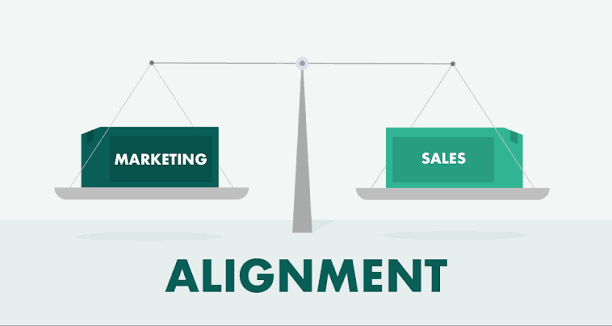
The shift toward buying signals is transforming the relationship between sales and marketing teams.
Instead of measuring success by the number of Marketing Qualified Leads generated, organizations are placing greater emphasis
on pipeline quality, account progression, opportunity creation, and revenue contribution.
Marketing teams are evolving beyond lead generation to become providers of actionable market intelligence. At the same time, sales teams are moving from reactive outreach toward proactive engagement based on real-time buying intent.
The objective is no longer simply to pass leads between departments. It is to identify the right accounts at the right moment and initiate meaningful conversations when prospects are genuinely ready to engage.
AI Is Making Buying Signal Analysis Smarter –
Artificial intelligence is accelerating this transformation by enabling organizations to interpret enormous volumes of behavioral data with remarkable accuracy.
Modern revenue intelligence platforms can analyze thousands of interactions across websites, email campaigns, CRM systems, third-party intent providers, and digital engagement channels. AI identifies behavioral patterns, stakeholder involvement, research frequency, and contextual signals that would be impossible to detect manually.
Rather than relying on static lead-scoring models, businesses are adopting dynamic qualification systems that continuously evolve as buyer behavior changes.
This enables sales teams to prioritize accounts with the highest likelihood of conversion while reducing time spent pursuing low-intent prospects.
MQLs Still Have a Place—But Not the Leading Role –
Although buying signals are becoming increasingly valuable, this does not mean Marketing Qualified Leads should disappear entirely.
MQLs continue to provide operational structure for organizations managing large inbound marketing programs. They remain useful for tracking campaign performance, organizing lead management processes, and measuring marketing engagement.
The difference is that MQLs should no longer serve as the primary indicator of revenue potential.
Instead, organizations should combine traditional lead qualification with intent data, behavioral intelligence, account insights, and predictive analytics to build a more accurate picture of buyer readiness.
This balanced approach allows businesses to identify opportunities earlier while improving collaboration between marketing and sales.
Conclusion –
The future of B2B demand generation is moving beyond simple lead scoring toward a deeper understanding of buyer intent.
Organizations that rely solely on Marketing Qualified Leads risk overlooking valuable opportunities because today’s purchasing decisions begin long before prospects submit a form or request a demo. By combining buying signals, intent data, artificial intelligence, and account-level insights, businesses can engage potential customers earlier in their decision-making journey and build stronger, more predictable sales pipelines.
As buying behavior continues to evolve, the organizations that embrace buying signal intelligence alongside traditional lead qualification will be better positioned to shorten sales cycles, improve conversion rates, and achieve sustainable revenue growth in an increasingly competitive marketplace.
Frequently Asked Questions (FAQs) –
1. What is a Marketing Qualified Lead (MQL)?
A Marketing Qualified Lead (MQL) is a prospect who has shown interest in a company’s products or services through marketing activities such as downloading content, attending webinars, or subscribing to newsletters. These leads are considered more likely to become customers than general website visitors and are typically passed to the sales team after meeting predefined qualification criteria.
2. What are buying signals in B2B sales?
Buying signals are behavioral and intent-based indicators that suggest a prospect or account is actively researching or considering a purchase. These signals can include repeated visits to product pages, third-party intent data, competitor comparisons, engagement from multiple stakeholders, and increased content consumption across digital channels.
3. How are buying signals different from traditional MQLs?
Traditional MQLs rely primarily on first-party marketing interactions such as form submissions, email clicks, and content downloads. Buying signals provide a broader view by combining first-party, second-party, and third-party data to identify genuine purchase intent across multiple channels and stakeholders.