


Introduction –
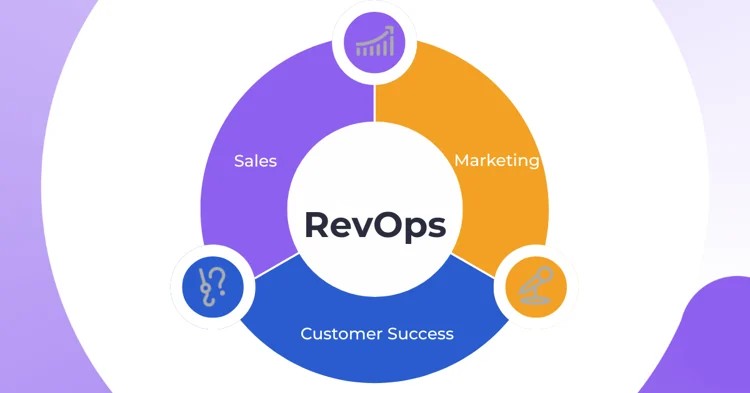
In modern organizations, revenue growth depends on more than just strong individual teams—it requires seamless coordination across Sales, Marketing, and Customer Success (CS). Traditionally, these departments have operated in silos, each focusing on its own goals, tools, and metrics. This lack of alignment often leads to inefficiencies, miscommunication, and missed revenue opportunities. Revenue Operations (RevOps) emerges as a strategic solution to this problem by unifying these functions under a single operational framework, ensuring that all teams work collaboratively toward shared business outcomes.
Understanding RevOps –
Revenue Operations, commonly known as RevOps, is a business function that aligns people, processes, and technology across all revenue-generating departments. Instead of treating Sales, Marketing, and Customer Success as separate entities, RevOps integrates them into a cohesive system with shared objectives and centralized data. The goal is to create a streamlined customer journey—from the first interaction to long-term retention—while maximizing revenue efficiency. By doing so, organizations can eliminate redundancies, improve visibility, and make more informed decisions.
The Challenge of Organizational Silos –
Silos are one of the biggest obstacles to sustainable growth. When Marketing focuses solely on lead generation without considering lead quality, Sales teams may struggle to convert those leads into customers. Similarly, if Customer Success teams lack visibility into the sales process, they may find it difficult to deliver on customer expectations. These disconnects result in inconsistent messaging, poor customer experiences, and lost opportunities for upselling or retention. Moreover, siloed data systems make it harder to track performance accurately, leading to flawed strategies and decision-making.
How RevOps Drives Alignment –
RevOps breaks down these silos by creating alignment across teams through shared goals, integrated systems, and standardized processes. Instead of working toward isolated KPIs, all departments contribute to common revenue targets. For instance, Marketing is evaluated based on pipeline contribution rather than just lead volume, while Customer Success focuses on retention and customer lifetime value alongside Sales. This alignment fosters collaboration and ensures that every team plays a role in driving revenue growth.
Centralized Data and Technology –
A critical component of RevOps is the use of centralized and integrated technology systems. By connecting CRM platforms, marketing automation tools, and customer support systems, organizations can establish a single source of truth. This unified data environment allows teams to access consistent, real-time information about customers, enabling better coordination and decision-making. It also reduces errors caused by duplicate or outdated data, ensuring that all teams operate with the same insights.
Process Optimization and Efficiency –
RevOps emphasizes the importance of standardized and optimized processes across the entire customer lifecycle. From lead qualification and distribution to onboarding and customer support, every step is clearly defined and continuously improved. Automation plays a key role in reducing manual tasks, allowing teams to focus on high-value activities. As a result, organizations can improve operational efficiency, reduce friction between departments, and accelerate revenue generation.
Enhancing Customer Experience –
One of the most significant advantages of RevOps is its impact on customer experience. When teams are aligned and data is shared, customers receive consistent communication and a smoother journey throughout their lifecycle. They no longer experience gaps between departments or conflicting information. Instead, they benefit from personalized interactions, faster response times, and a more cohesive relationship with the brand. This improved experience not only increases customer satisfaction but also drives loyalty and long-term revenue.
Benefits of Implementing RevOps –
Organizations that adopt RevOps often experience measurable improvements in performance. These include better pipeline visibility, higher conversion rates, increased customer retention, and more predictable revenue growth. Additionally, RevOps enables businesses to scale more effectively by creating a structured and repeatable approach to revenue generation. It also enhances accountability, as all teams are aligned with shared metrics and outcomes.
Benefits of Implementing RevOps –
| Benefit | Description |
| Improved Revenue Growth | Better alignment leads to higher conversions and deal size |
| Increased Efficiency | Reduced duplication and streamlined workflows |
| Better Data Visibility | Real-time insights across all teams |
| Higher Customer Retention | Consistent experience improves loyalty |
| Scalable Operations | Structured processes support business growth |
Challenges in RevOps Adoption –
Despite its benefits, implementing RevOps is not without challenges. Organizations may face resistance to change, especially when teams are accustomed to working independently. Integrating legacy systems can also be complex, requiring time and investment. Furthermore, poor data quality or lack of clear ownership can hinder the effectiveness of RevOps initiatives. To overcome these challenges, businesses need strong leadership support, clear communication, and a phased implementation strategy.
Conclusion –
Revenue Operations is a transformative approach that redefines how organizations generate and sustain revenue. By breaking down silos between Sales, Marketing, and Customer Success, RevOps creates a unified system that drives efficiency, collaboration, and customer-centric growth. In an increasingly competitive and data-driven environment, adopting RevOps is no longer optional but essential for long-term success. Organizations that embrace this model will be better equipped to deliver seamless customer experiences and achieve sustainable revenue growth.