

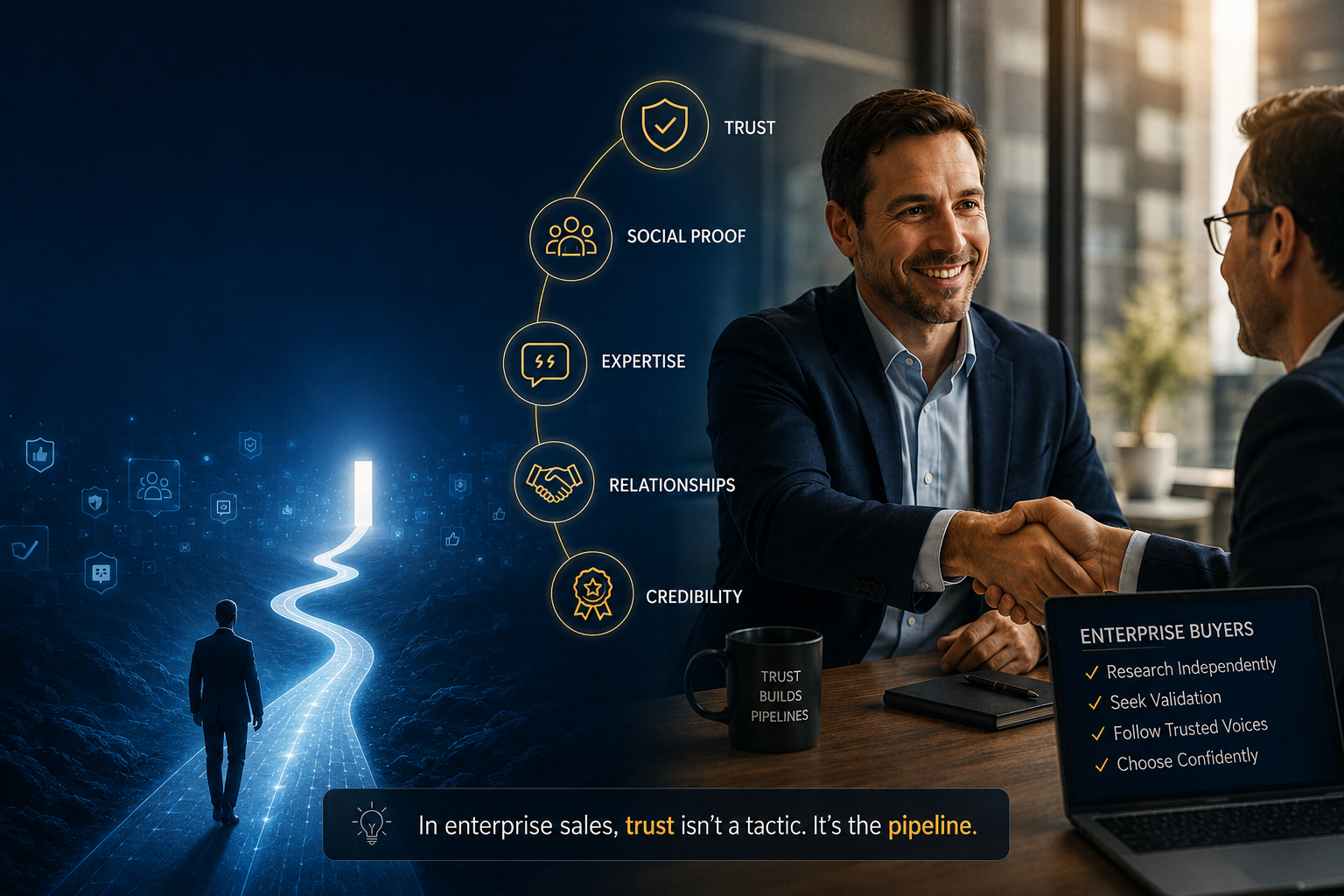

For years, enterprise sales teams believed that success was directly linked to outreach volume. The formula seemed simple: send more emails, make more calls, schedule more meetings, and more opportunities would follow. Sales organizations invested heavily in expanding outbound campaigns, refining follow-up sequences, and increasing the number of customer touchpoints. While these strategies were effective when buyers relied on sales representatives for information, today’s B2B purchasing journey has fundamentally changed.
The Quiet Pipeline represents this new reality. Modern enterprise buyers are making critical purchasing decisions long before they respond to a sales email or book a discovery call. Instead of being influenced by the company that contacts them first, buyers are increasingly influenced by the company they trust most. In today’s digital-first marketplace, credibility, expertise, and consistent market presence are becoming stronger drivers of revenue than outreach volume alone.
Key Insight
“The strongest enterprise pipelines aren’t always the loudest—they’re built quietly through consistent trust, valuable expertise, and long-term credibility.”
Why High Outreach Volume No Longer Guarantees More Enterprise Deals –
Traditional B2B sales strategies focused on maximizing activity. Success was measured through metrics such as emails sent, calls completed, meetings booked, and opportunities created. While these indicators remain important, they no longer tell the complete story.
Enterprise buyers now complete much of their research independently. They compare vendors, explore analyst reports, review customer testimonials, participate in professional communities, consume executive content, and even use AI-powered search tools before engaging with a sales team.
By the time a prospect becomes visible in the CRM, much of the buying journey has already taken place.
This shift means organizations relying solely on outbound activity often enter the conversation after buyer preferences have already been formed.
Understanding the Quiet Pipeline –
A quiet pipeline should never be mistaken for an inactive one.
Instead, it describes the invisible period during which buyers are evaluating vendors without direct interaction. Throughout this stage, decision-makers gather information, discuss solutions internally, validate business cases, and compare providers before expressing any buying intent.
These hidden activities rarely appear in traditional marketing analytics or sales dashboards, yet they significantly influence purchasing decisions.
Organizations that understand this invisible buying phase are better positioned to influence prospects before formal sales conversations begin.
Trust Signals Have Become the New Competitive Advantage –
As information becomes more accessible, buyers are placing greater emphasis on trust rather than marketing claims.
Trust signals reduce uncertainty during complex purchasing decisions and help buyers feel confident in their vendor selection.
Some of the strongest trust signals include:
- Consistent thought leadership
- Customer success stories
- Executive visibility
- Industry expertise
- Transparent communication
- Positive customer advocacy
- Product maturity
- Independent reviews and analyst recognition
Unlike promotional messaging, these signals build credibility over time and shape buying decisions long before outreach occurs.
Market Visibility Influences Enterprise Buying Decisions –
Organizations that consistently educate their market often gain an advantage before competitors even begin their sales outreach.
Publishing research, sharing industry insights, participating in webinars, contributing expert opinions, and producing educational content all increase market visibility.
Repeated exposure creates familiarity.
Familiarity builds confidence.
Confidence reduces perceived risk.
As a result, companies become part of the buyer’s consideration set before formal procurement processes begin.
Why Executive Branding Matters More Than Ever –
Enterprise buyers increasingly evaluate the people behind the company as much as the products themselves.
Business leaders, founders, technical experts, and customer-facing executives all contribute to organizational credibility through their public presence.
Decision-makers observe how leadership communicates, responds to industry changes, shares expertise, and demonstrates thought leadership across professional networks.
This visibility strengthens organizational trust and positions the company as a reliable long-term partner rather than simply another software vendor.
AI Is Changing Outreach—But Trust Remains Human –

Artificial intelligence has transformed outbound sales by enabling personalized messaging, automated follow-ups, and intelligent prospecting.
However, these capabilities are now widely available across the market.
As AI makes outreach easier for everyone, buyers are becoming more selective about who earns their attention.
The companies that stand out are not necessarily those sending the most messages—they are those that consistently demonstrate expertise, transparency, and credibility.
Technology can accelerate communication, but it cannot replace authentic trust.
Marketing and Sales Must Build Trust Together –
The shift toward trust-driven buying is changing the relationship between marketing and sales.
Marketing is no longer responsible only for generating leads, while sales is no longer focused solely on closing deals.
Both functions now contribute to building buyer confidence throughout the customer journey.
Educational content, executive thought leadership, customer success stories, product communication, and meaningful customer relationships all work together to strengthen trust before buying conversations begin.
This collaborative approach creates stronger pipelines and improves long-term revenue performance.
Measuring the Quiet Pipeline –
Organizations adapting to modern buying behavior are moving beyond activity-based metrics.
Instead of focusing exclusively on outreach volume, they increasingly monitor indicators that reflect buyer confidence and market influence.
| Traditional Sales Metrics | Modern Trust-Based Metrics |
|---|---|
| Emails Sent | Buyer Engagement Quality |
| Calls Made | Share of Industry Attention |
| Meetings Booked | Executive Influence |
| Open Rates | Content Engagement Depth |
| Pipeline Volume | Customer Advocacy |
| Response Rate | Brand Trust & Category Authority |
These indicators provide a more accurate understanding of future revenue opportunities because they measure influence rather than activity alone.
Conclusion –
The future of enterprise sales belongs to organizations that understand The Quiet Pipeline.
Modern buyers no longer make purchasing decisions solely because they receive more emails or sales calls. Instead, they choose vendors that consistently demonstrate expertise, credibility, and trust throughout the buying journey.
Outreach remains an essential component of sales, but its purpose is evolving. Rather than creating awareness from scratch, successful outreach now activates trust that has already been established through valuable content, executive visibility, customer advocacy, and market education.
Businesses that invest in building trust before requesting attention will create stronger pipelines, shorten sales cycles, and develop lasting customer relationships. In today’s competitive B2B landscape, trust is no longer simply a branding objective—it has become one of the most valuable drivers of predictable revenue growth.
Frequently Asked Questions (FAQs) –
What is the Quiet Pipeline in B2B sales?
The Quiet Pipeline refers to the hidden phase of the buying journey where enterprise buyers research vendors, evaluate solutions, and build internal consensus before contacting a sales team.
Why are trust signals important in enterprise sales?
Trust signals such as thought leadership, customer success stories, executive branding, and industry expertise reduce buyer uncertainty and influence purchasing decisions before formal sales engagement begins.
How has AI changed outbound sales?
AI has improved outreach through automation and personalization, but because these capabilities are widely available, trust and credibility have become stronger competitive differentiators.