


Introduction –
In today’s fast-paced digital workplace, employees no longer have the time or patience for lengthy training programs. Organizations are increasingly adopting microlearning as a strategic approach to deliver short, focused learning experiences that fit seamlessly into daily workflows. These bite-sized modules not only improve engagement but also enhance knowledge retention. However, as microlearning expands across teams and regions, tracking its effectiveness becomes a significant challenge. To address this, organizations are leveraging technologies like SCORM, xAPI, and Artificial Intelligence (AI) to monitor and optimize learning outcomes at scale.
Understanding Microlearning –
Microlearning refers to delivering content in small, highly targeted units that typically take only a few minutes to complete. Each module is designed to address a specific learning objective, making it easier for learners to absorb and apply knowledge immediately. This approach aligns well with modern learning preferences, where users seek quick answers and just-in-time learning. As a result, organizations benefit from increased learner engagement, faster skill acquisition, and improved productivity. Despite these advantages, the real value of microlearning lies in the ability to measure how effectively learners are applying what they learn.
Challenges in Tracking Learning Outcomes –
As organizations scale microlearning initiatives, tracking learner progress and performance becomes increasingly complex. Learners often access content across multiple devices, including smartphones, tablets, and desktops, making it difficult to maintain consistent tracking. Additionally, a significant portion of learning happens outside traditional Learning Management Systems (LMS), such as through videos, simulations, or on-the-job experiences. Traditional tracking methods often fail to capture these interactions, leading to incomplete data and limited insights. This creates a need for more advanced tracking mechanisms that can provide a comprehensive view of the learning journey.
Role of SCORM in Structured Learning –
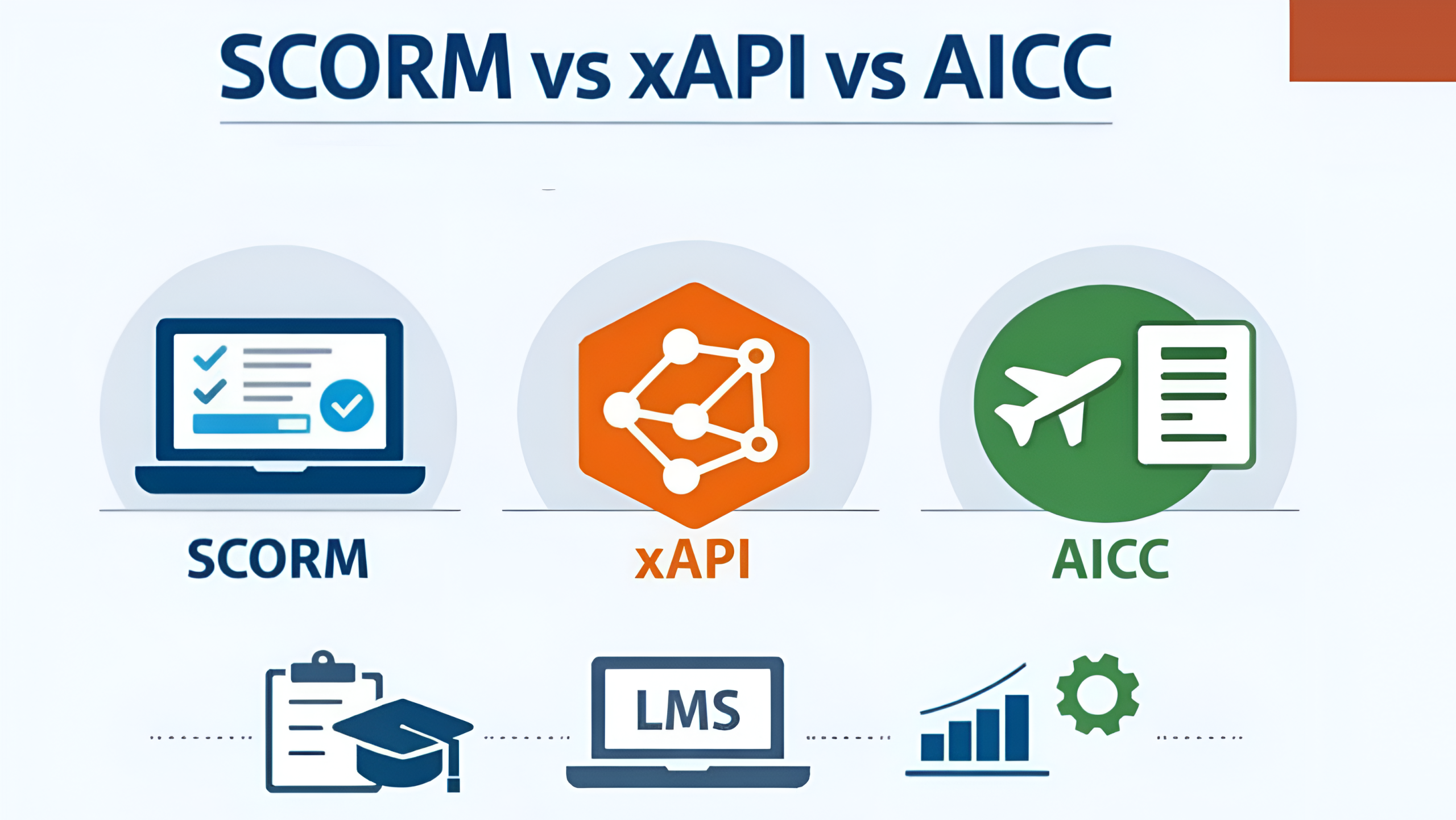
SCORM, or Sharable Content Object Reference Model, has long been the standard for eLearning content delivery and tracking. It enables organizations to package learning content in a standardized format that can be easily deployed across different LMS platforms. SCORM primarily tracks basic metrics such as course completion, scores, and time spent on modules. While this is useful for structured training programs and compliance requirements, it falls short when it comes to capturing detailed learner interactions or informal learning experiences. As microlearning becomes more dynamic and distributed, relying solely on SCORM can limit the depth of insights organizations can achieve.
xAPI: Expanding Learning Visibility –
To overcome the limitations of SCORM, many organizations are adopting xAPI, also known as the Experience API. Unlike SCORM, xAPI allows tracking of virtually any learning activity, regardless of where it occurs. It captures detailed data about learner behavior, such as interactions with videos, participation in simulations, or even real-world task completion. This data is stored in a Learning Record Store (LRS), enabling organizations to build a more comprehensive picture of the learning experience. By using xAPI, companies can track both formal and informal learning, making it a powerful tool for scaling microlearning initiatives.
AI-Powered Learning Analytics –
While SCORM and xAPI focus on data collection, Artificial Intelligence plays a crucial role in interpreting that data. AI-driven systems analyze learner behavior, identify patterns, and generate actionable insights that help organizations improve their training strategies. For instance, AI can recommend personalized learning paths based on individual performance, ensuring that each learner receives content tailored to their needs. It can also predict potential skill gaps, identify learners who may be struggling, and suggest interventions before performance declines. Additionally, AI helps organizations connect learning activities to business outcomes, such as improved sales performance or reduced onboarding time.
Integrating SCORM, xAPI, and AI –
To effectively scale microlearning, organizations must integrate SCORM, xAPI, and AI into a unified learning ecosystem. SCORM can be used for structured content and compliance tracking, while xAPI captures a broader range of learning experiences across platforms. The data collected through these technologies can then be analyzed using AI to generate meaningful insights and recommendations. This integrated approach ensures that organizations not only track learning activities but also understand their impact on performance and productivity.
Best Practices for Implementation –
Successfully scaling microlearning requires a strategic approach. Organizations should design content with tracking in mind, ensuring that each module captures meaningful data. Combining SCORM and xAPI allows for both structured and flexible tracking, while implementing a centralized Learning Record Store ensures data consistency. Additionally, adopting AI-driven analytics early in the process enables continuous improvement of learning strategies. Most importantly, organizations should focus on measuring outcomes rather than just completion rates, aligning learning metrics with business goals.
Conclusion –
Microlearning is reshaping the way organizations deliver training, offering a flexible and engaging alternative to traditional methods. However, its true potential can only be realized when learning outcomes are effectively tracked and analyzed. By leveraging SCORM for foundational tracking, xAPI for comprehensive data collection, and AI for intelligent insights, organizations can build a scalable and data-driven learning ecosystem. This approach not only enhances the learning experience but also ensures that training initiatives deliver measurable business value.