


Introduction –
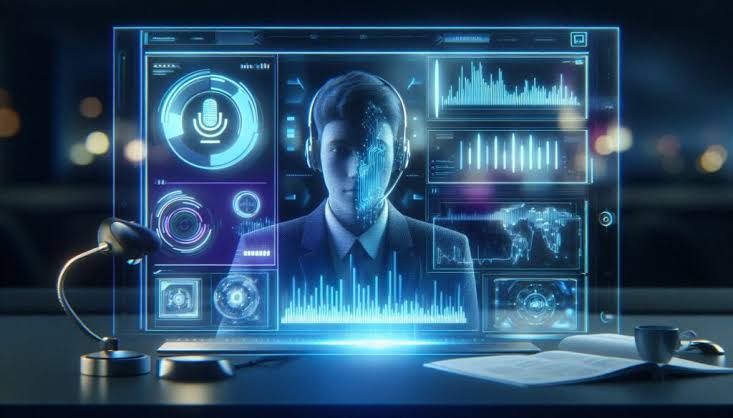
Multimodal AI in HR is emerging as a powerful way for organizations to understand employee experiences across different forms of communication. Traditional HR technology has primarily relied on structured information such as employee records, survey responses, performance scores, attendance data, and recruitment information. While these sources remain valuable, they do not always capture the full picture of how employees communicate, collaborate, learn, and experience the workplace.
Multimodal AI changes this equation by allowing artificial intelligence to work with different types of information, including text, voice, images, video, documents, and other interaction data. Instead of analyzing one source in isolation, organizations can potentially combine multiple signals to understand workplace experiences more comprehensively.
For HR leaders, this creates significant opportunities in recruitment, onboarding, learning and development, employee engagement, performance management, workforce planning, and internal communication. At the same time, it introduces serious questions about privacy, consent, surveillance, bias, transparency, and employee trust. The future of multimodal AI in HR will therefore depend not only on what the technology can analyze, but also on how responsibly organizations choose to use it.
What Is Multimodal AI?
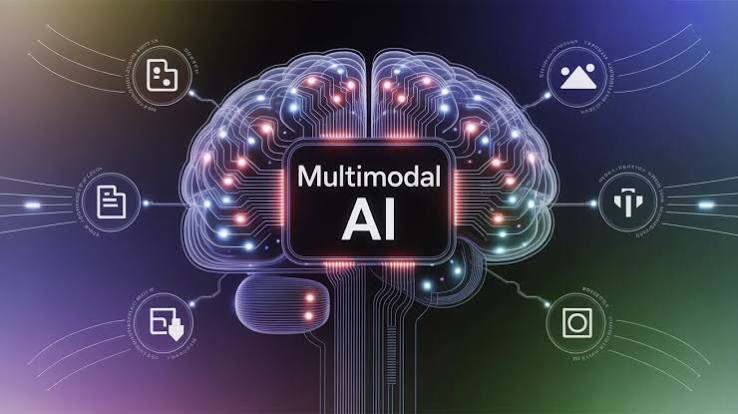
Multimodal AI refers to artificial intelligence systems that can understand and process multiple types of information rather than relying on a single data format. A multimodal system can potentially analyze text, speech, images, video, documents, and other forms of data within a connected workflow.
In an HR environment, this could mean analyzing employee survey comments alongside meeting transcripts, training interactions, support conversations, and other approved workplace information. The purpose is not simply to collect more employee data. The goal is to understand information in context and identify patterns that may not be visible when each data source is analyzed separately.
For example, an HR team may discover through employee survey responses that workers are struggling with a new process. Voice or video interactions from training sessions could provide additional context about the questions employees are asking. Combining these signals could help HR identify where employees need additional support.
Understanding Employee Feedback More Deeply –
Employee surveys provide valuable information, but traditional surveys often reduce employee experiences to structured questions and written comments.
Multimodal AI could help HR analyze feedback across multiple approved channels and identify recurring themes.
For example, written survey responses might reveal concerns about workload, while employee questions during an internal town hall could provide additional context. Meeting transcripts might reveal recurring questions about organizational changes.
The combination of these signals could help HR understand not only what employees are saying, but also which topics repeatedly appear across different communication formats.
The important distinction is that organizations should analyze aggregated patterns rather than attempting to monitor individual employees unnecessarily.
Potential HR Applications of Multimodal AI –
| HR Function | Data Type | Potential Application |
|---|---|---|
| Recruitment | Text, voice, video | Candidate information analysis |
| Onboarding | Text, documents, video | Identify onboarding gaps |
| Learning | Video, voice, text | Understand learning needs |
| Employee engagement | Surveys, text, voice | Identify recurring themes |
| Internal communication | Text, audio, video | Measure communication clarity |
| Performance support | Documents, conversations | Identify coaching opportunities |
| HR support | Text, voice | Automate employee assistance |
| Workforce planning | Structured and unstructured data | Identify workforce trends |
| Knowledge management | Documents, text, video | Improve information discovery |
| Employee experience | Multiple data types | Identify experience patterns |
Transforming Employee Onboarding –
The first few weeks of employment can significantly influence employee experience. New employees often need to understand company policies, technology systems, team structures, responsibilities, and organizational culture.
Multimodal AI could support onboarding by analyzing questions employees ask through approved systems and identifying common areas of confusion.
If many new employees repeatedly ask about the same process, HR may discover that existing onboarding materials are unclear.
AI could also help employees interact with onboarding information conversationally. Instead of searching through multiple documents, an employee could ask a question and receive a relevant explanation based on approved organizational knowledge.
This could make onboarding more personalized while reducing repetitive administrative work for HR teams.
Improving Learning and Development –
Training is another area where multimodal AI could create new possibilities.
Traditional learning analytics often focus on course completion, test results, attendance, and employee feedback. These metrics provide useful information but may not fully explain where learners are struggling.
Multimodal systems could potentially analyze training materials, employee questions, written responses, and approved interaction data to identify common areas of difficulty.
For example, if employees consistently ask questions about a particular concept during training, the organization could update the learning material or create additional resources.
AI could also help generate personalized learning recommendations based on an employee’s role, skills, learning objectives, and previous training activity.
AI-Powered HR Assistants –
Multimodal AI could make HR support more conversational.
Employees may ask HR questions through text, voice, or other interfaces. An AI assistant could potentially understand the question, identify the relevant policy or document, and provide an answer.
For example, an employee could ask about leave policies, benefits enrollment, reimbursement procedures, or internal HR processes.
This could reduce the volume of repetitive questions handled manually by HR teams and allow HR professionals to focus on more complex employee issues.
However, HR assistants should be designed to clearly distinguish between informational support and decisions requiring human intervention.
Sensitive employee matters should be escalated to qualified HR professionals rather than being handled entirely by automated systems.
Analyzing Workplace Communication –
Communication is central to organizational performance. Misunderstandings, information gaps, and unclear instructions can create operational problems.
Multimodal AI could analyze approved workplace communication to identify broad patterns, such as recurring questions, frequently misunderstood processes, or topics generating confusion.
For example, if employees repeatedly ask for clarification after a company announcement, HR and leadership may discover that the original communication was not sufficiently clear.
This creates an opportunity for AI to function as a communication feedback mechanism.
The purpose should not be to evaluate individual employees’ speech or behavior. Instead, organizations can focus on improving the quality and effectiveness of workplace communication.
Video and Voice Analysis Requires Special Care –
Voice and video contain significantly more information than written text. They can include facial expressions, tone, gestures, background information, and other contextual signals.
This makes them potentially powerful sources of information, but it also creates greater privacy concerns.
Organizations should be cautious about using AI to infer emotions, personality, mental states, or employee performance from facial expressions or voice characteristics. Such inferences can be unreliable and may create unfair outcomes.
For HR, the safest applications are generally those focused on explicit content and clearly defined business purposes rather than attempting to determine hidden characteristics about employees.
Employee Privacy Must Come First –
The greatest challenge associated with multimodal AI in HR may not be technical. It may be trust.
Employees need to understand what information is being collected, why it is being analyzed, how long it is retained, and who can access it.
An organization that secretly analyzes employee conversations could quickly create a culture of surveillance.
Even when the technology is legally permitted, it may still damage employee trust if people believe that every conversation, meeting, or interaction is being monitored.
Therefore, transparency should be treated as a core requirement rather than an optional communication exercise.
Consent and Data Governance –
Organizations implementing multimodal AI should establish clear governance policies before collecting or analyzing sensitive workplace information.
These policies should address data collection, consent where applicable, retention periods, access controls, security, anonymization, purpose limitations, and employee rights.
HR and legal teams should work closely with technology and security teams to establish appropriate safeguards.
Employees should also receive understandable explanations rather than complex legal language that makes it difficult to understand how their information is being used.
Avoiding the Surveillance Trap –
There is a major difference between using AI to improve employee experiences and using AI to monitor employees continuously.
For example, analyzing aggregated onboarding questions to improve training is very different from analyzing every employee interaction to score individual engagement.
The first approach can provide organizational value while limiting unnecessary intrusion. The second can create a surveillance environment that damages trust.
HR leaders should therefore ask a simple question before implementing a new AI capability:
“Does this use case improve the employee experience enough to justify the data it requires?”
If the answer is unclear, the organization should reconsider the design.
Human Judgment Remains Essential –
Multimodal AI can identify patterns, summarize information, and provide recommendations, but HR decisions often involve complex human circumstances.
An AI system may identify that employee sentiment around a particular policy has declined. It cannot automatically determine why that happened or what the appropriate organizational response should be.
Human HR professionals need to interpret the information, investigate the underlying causes, consider organizational context, and decide what action is appropriate.
This creates a human-in-the-loop model where AI provides analytical support while people retain responsibility for important decisions.
The Risk of AI Bias –
AI systems learn from data, and workplace data can contain historical biases.
If historical hiring decisions favored particular backgrounds, an AI system trained on those decisions could reproduce those patterns. If performance evaluations contain inconsistent standards, AI-based analysis could potentially amplify those inconsistencies.
Multimodal systems can introduce additional complexity because different types of data may contain different forms of bias.
Organizations should therefore conduct regular testing, validation, monitoring, and human review of AI systems used in HR.
Building a Responsible Multimodal HR Strategy –
Organizations should begin with clearly defined business problems rather than starting with the technology itself.
Instead of asking, “Where can we use multimodal AI?”, HR leaders should ask, “Which employee or HR problem could benefit from better information?”
Potential starting points include improving onboarding materials, automating routine HR support, identifying training gaps, summarizing employee feedback, and improving internal communication.
Low-risk use cases can provide organizations with experience before they move toward more sensitive applications.
Measuring Business and Employee Impact –
Organizations should measure whether multimodal AI actually improves HR outcomes.
Potential metrics include:
- HR service response time
- Employee support resolution rates
- Onboarding completion
- Training effectiveness
- Employee satisfaction
- Content quality
- Time saved by HR teams
- Accuracy of AI-generated summaries
- Escalation rates
- Employee trust and acceptance
Technology adoption alone should not be considered success.
The real question is whether multimodal AI produces better employee experiences and better HR outcomes without creating unacceptable risks.
The Future of Multimodal AI in HR –
The future of HR technology is likely to become increasingly conversational and multimodal. Employees may interact with HR systems through text, voice, documents, video, and natural-language interfaces rather than navigating complex menus and forms.
HR professionals could use AI to summarize large amounts of organizational information, identify emerging workforce themes, generate learning resources, answer routine employee questions, and support workforce planning.
However, the most successful organizations will likely be those that combine technological capability with strong governance.
The goal should not be to create an organization where AI watches everything. The goal should be to create an organization where AI helps HR understand important patterns while respecting employee privacy and maintaining human accountability.
Conclusion –
Multimodal AI could transform HR by allowing organizations to work with text, voice, video, documents, and other forms of employee interaction in more connected ways. It could improve recruitment support, onboarding, learning, employee engagement, HR service delivery, internal communication, and workforce insights.
But greater visibility into employee interactions also creates greater responsibility. Organizations must avoid turning AI into a surveillance mechanism and should establish clear boundaries around data collection, consent, security, access, and decision-making.
The future of multimodal AI in HR should therefore not be measured by how much employee data an organization can analyze. It should be measured by how effectively organizations can use relevant information to improve employee experiences while protecting trust.
“The future of AI-powered HR is not about understanding every employee interaction. It is about understanding the right signals without losing the human context.”
Frequently Asked Questions –
Multimodal AI in HR refers to AI systems that can process and understand multiple types of information, such as text, voice, video, documents, and other approved workplace data. It can help HR teams analyze information and automate selected processes.
Multimodal AI can support recruitment, onboarding, learning and development, employee support, engagement analysis, internal communication, and workforce planning. It can help HR teams identify patterns across different types of information.
Technically, AI systems can process various forms of communication, but organizations should not assume that they should analyze every employee conversation. Privacy, consent, legal requirements, security, transparency, and employee trust must be considered before collecting or analyzing workplace communication.
AI technologies can attempt to infer emotional or behavioral signals from voice and video, but such interpretations can be unreliable and raise significant ethical and privacy concerns. HR organizations should be especially cautious about using these inferences for employment decisions.
Multimodal AI is more likely to automate selected administrative and analytical tasks than completely replace HR professionals. Human judgment remains important for employee relations, strategic workforce decisions, ethical considerations, conflict resolution, and complex organizational situations.